 Bellingham
 Windows Built for Edgemoor's Bluff and Bayfront Setting
Edgemoor sits above Bellingham Bay, and that position is exactly what makes window work here different from a job a few miles inland. Homes along the bluff face near-constant marine exposure, mature tree cover that keeps siding and trim damp longer than open lots, and older construction that doesn't always match the "standard" window sizes big-box replacement kits assume. A custom window job in this neighborhood has to account for all of that from the first measurement, not just at the point of install.
We've done enough window work around Bellingham and Whatcom County to know that a window that performs fine in a dry, inland climate can fail early on a bay-facing wall. The goal on an Edgemoor home isn't just to get new glass in the opening — it's to get a window and installation detail that will actually hold up to what this specific setting throws at it year after year.
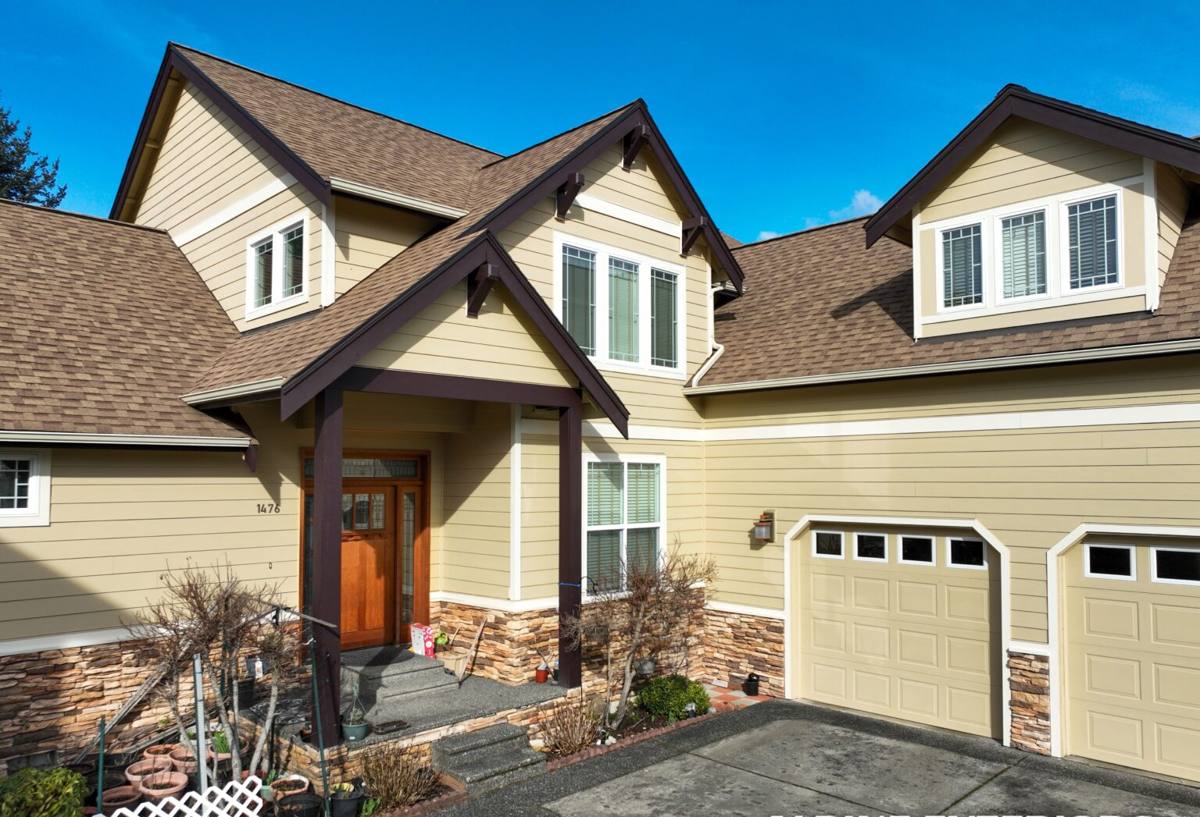
What Bellingham Bay's Climate Does to Windows Over Time
Salt Air
Airborne salt off the bay settles on hardware, weatherstripping, and exposed fasteners. Over years, it accelerates corrosion on lower-grade hinges, locks, and screws, and it breaks down cheaper finishes faster than a manufacturer's warranty documentation usually assumes. This is a bigger factor for homes with a direct sightline to the water, but it affects the whole neighborhood to some degree.
Driving Rain
Storms coming off the Strait of Georgia and the bay tend to arrive sideways, not straight down. That wind-driven rain finds any weakness in flashing, sealant, or a window's drainage path far faster than a gentle vertical rain would. A window that's watertight in a showroom can still leak on a bluff-facing wall if the flashing detail behind it wasn't built for wind-driven exposure.
Moss Season
Whatcom County's long wet season, combined with the shade from mature trees common in Edgemoor, keeps moisture sitting on sills, trim, and siding for months at a stretch. Wood trim and sills that stay damp invite rot and moss growth, and once moss gets a foothold around a window frame it holds even more moisture against the wood — a cycle that speeds up decay if it isn't addressed.
Telltale Signs Your Windows Are Losing the Battle
- Fogging or a hazy film between panes — the seal has failed and the gas fill is gone
- Soft or spongy wood at the sill or bottom corners of the frame
- Visible moss or dark streaking building up on the exterior trim around the window
- Drafts you can feel near the frame even when the window is fully latched
- Hardware that's stiff, corroded, or won't latch tightly anymore
- Condensation forming on the inside of the glass regularly through fall and winter
- Paint or finish that's peeling specifically around the window opening, not the wider wall
What a Correct Custom Window Installation Actually Involves
"Custom" isn't a marketing word here — it's a practical necessity. Many Edgemoor homes were built before window sizing was standardized the way it is in newer subdivisions, so openings often need to be measured and, in some cases, fabricated to fit rather than ordered off a generic size chart. Getting this step wrong is the single most common reason a window install underperforms.
Beyond sizing, the details that actually determine how a window performs in this climate are:
- Precise rough-opening measurement — accounting for any settling or slight out-of-square condition common in older framing
- Careful removal that protects original trim and siding wherever it's being reused or matched
- Proper flashing integration — flashing tape and pans that direct water back out of the wall assembly, not just caulk over the gap
- Correct insulation of the gap around the new frame, without over-packing in a way that bows the frame
- Weather-appropriate sealant chosen for exterior exposure, not a generic interior-grade caulk
- Glass package matched to orientation — a bay-facing window has different sun and moisture demands than one tucked under an eave
Choosing the Right Frame Material for a Marine Climate
There's no single "best" window material for every home — it depends on the home's age, style, and how exposed that particular wall is. Here's how the common options actually compare for a bay-influenced climate like Edgemoor's:
| Frame Material | Salt Air / Moisture Resistance | Maintenance | Best Fit |
|---|---|---|---|
| Vinyl | Good — won't rot or corrode, but hardware quality varies by manufacturer | Low | Budget-conscious replacements, rear or side elevations |
| Fiberglass | Very good — dimensionally stable, resists moisture and salt exposure well | Low | Bay-facing walls, homes wanting long-term low upkeep |
| Wood, clad exterior | Good on the clad side; interior wood still needs normal care | Moderate | Older or architecturally distinct homes where wood interior trim matters |
| Aluminum | Fair — can corrode faster in salt air unless properly coated | Moderate to high | Specific architectural styles only; we discuss trade-offs case by case |
We'll walk through these trade-offs against your home's actual exposure and style rather than defaulting to one product line for every job.
Our Process, Start to Finish
- On-site assessment — we look at every opening being replaced, note the exposure direction, and check the condition of the surrounding trim and sheathing before quoting anything
- Measuring and material selection — exact rough-opening dimensions are taken and matched against the frame material and glass package that fit the home and budget
- Fabrication and scheduling — custom sizes take longer to arrive than stock sizes, and we set expectations up front rather than guessing
- Removal and prep — old units come out carefully, and any soft or rotted framing found underneath gets addressed before a new window ever goes in
- Installation with proper flashing — this is the step that determines whether the window stays dry for the next twenty years, and it's where we spend the most care
- Sealing, insulation, and finish work — interior and exterior trim is finished to match the surrounding wall
- Final walkthrough — every window is opened, closed, and locked in front of you before we consider the job done
What Affects the Cost of Custom Windows in Edgemoor
Every home is different, so we quote based on a walkthrough rather than a phone estimate — but these are the main factors that move the price up or down:
| Cost Factor | Why It Matters |
|---|---|
| Number and size of openings | More or larger windows mean more material and labor time |
| Frame material chosen | Vinyl, fiberglass, and clad-wood carry different material costs and labor requirements |
| Glass package | Double- vs. triple-pane, low-E coatings, and tinting all affect price and performance |
| Non-standard sizing | Custom fabrication for older, non-standard openings costs more than stock sizes |
| Condition behind the old window | Rot or water damage found during removal adds repair scope before the new window goes in |
| Access and site conditions | Bluff-side lots, second-story openings, or limited access can add setup time |
We'll break these down clearly in a written estimate so you know exactly what you're paying for and why — no vague lump-sum numbers.
Why Hiring a Crew That Already Works in Edgemoor Matters
A window installer who mostly works newer, standardized subdivisions can be caught off guard by the realities of an older bluff-side home — non-standard openings, mature landscaping that limits equipment access, narrower streets for staging materials, and the kind of architectural detailing that's worth matching rather than replacing with something generic. Crews familiar with this part of Bellingham know to check for these things before the crew even shows up with materials, not after.
There's also a practical side: knowing which Whatcom County suppliers can turn around a custom size in a reasonable timeframe, and building a schedule around the reality of our wet season rather than hoping for a dry week that may not come. None of that shows up in a generic sales pitch, but it's the difference between a smooth project and a delayed, frustrating one.
Living With Custom Windows in a Salt-Air, Moss-Prone Climate
New windows reduce maintenance, but they don't eliminate it — especially in this setting. A few habits go a long way toward protecting the investment:
- Rinse salt residue off exterior frames and hardware periodically, especially on bay-facing walls
- Keep gutters and nearby roof valleys clear so runoff doesn't sheet directly down over window trim
- Trim back tree limbs and shrubs that keep a window's exterior trim shaded and damp longer than it needs to be
- Check exterior caulking annually, since even good sealant eventually needs a touch-up in a wet climate
- Address any moss on nearby trim promptly rather than letting it spread onto the window surround
If you're weighing whether it's time to replace windows on an Edgemoor home, or you just want a straight answer on what's actually happening with the ones you have, we're happy to take a look. The estimate is free, there's no pressure, and you'll get a clear explanation of what we find — fill out the form below to get started.