 Bellingham
 Building Decks for Puget Homes in a Tough Marine Climate
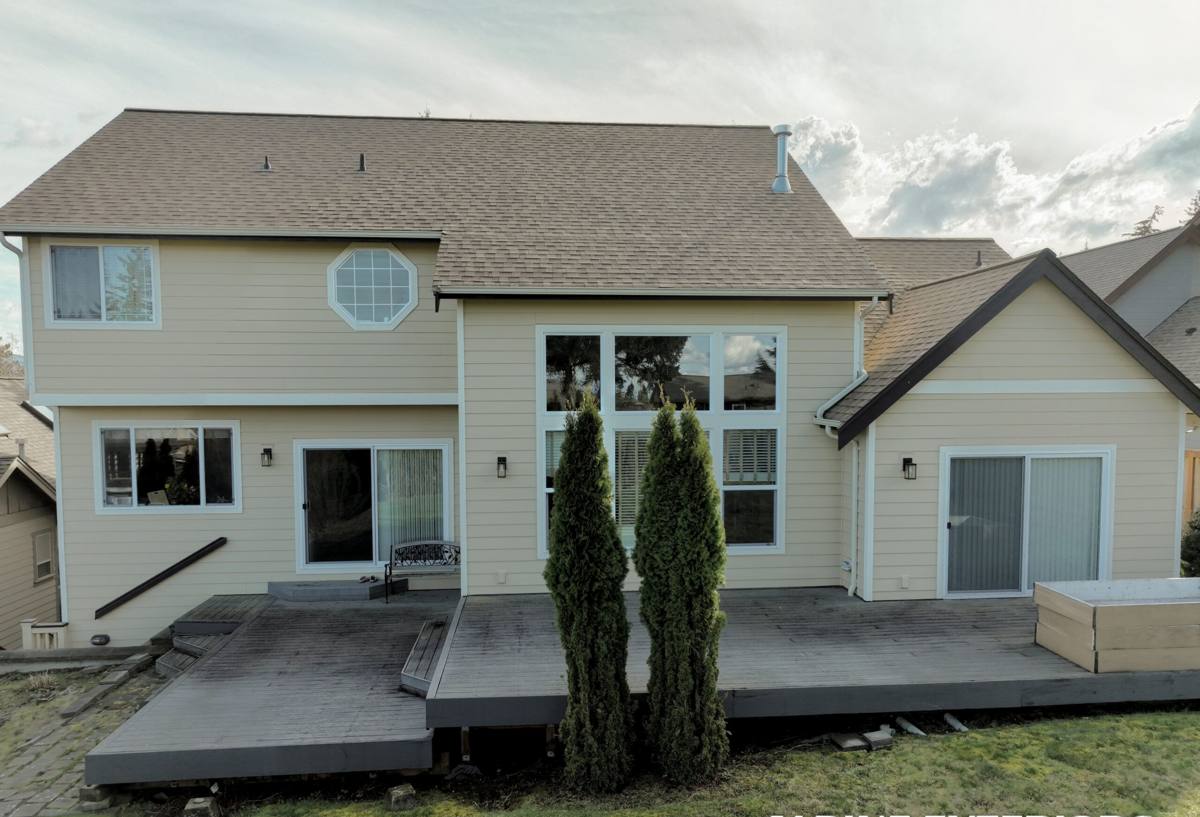
Puget sits close enough to the water that its decks live a different life than a deck built twenty miles inland. Salt-laden air moves through the neighborhood on a regular basis, driving rain comes in sideways for months at a stretch, and the long gray stretch between fall and spring gives moss and algae plenty of time to take hold on anything that stays damp. A deck built without that environment in mind will show it within a season or two: soft spots at the ledger, black streaking on the boards, corroded fasteners bleeding rust into the wood, and a walking surface that turns slick the moment the temperature drops.
We build decks in and around Bellingham with that climate as the starting assumption, not an afterthought. That means material choices, fastener selection, framing details, and drainage planning are all made with salt exposure and near-constant moisture in mind from the first sketch, not patched in later.
What Puget's Climate Actually Does to a Deck
Salt Air and Metal Fatigue
Airborne salt accelerates corrosion on anything metal — nails, screws, joist hangers, railing brackets. Standard electro-galvanized hardware that would be fine in a drier inland town can start showing rust bleed within a year or two this close to the water. Once a fastener corrodes, it loses holding strength long before the wood around it shows any obvious damage, which is part of why deck failures in this area tend to be structural surprises rather than slow, visible declines.
Driving Rain and Water Intrusion
Rain here doesn't fall straight down for much of the year — wind pushes it sideways and up under rail caps, into ledger connections, and into any gap where end grain is exposed. A deck design that works fine somewhere with calmer weather can let water track straight into the house framing at the ledger board, which is one of the most common sources of hidden rot we find on decks we're asked to repair rather than build new.
The Long Moss Season
Between the shade of mature trees, the humidity, and months of overcast weather, moss and algae get a long uninterrupted run on any deck surface that doesn't dry out quickly. Beyond the cosmetic issue, damp moss holds moisture against the board surface, which speeds up wood decay and turns the deck into a genuine slip hazard on stairs and ramps.
What a Correctly Built Puget Deck Requires
Given all of that, a deck built for this specific area needs to do a few things well that a generic build doesn't always prioritize:
- Shed water fast, with consistent slope and gapping that doesn't rely on the boards drying between rain events
- Keep the ledger-to-house connection fully flashed and sealed, since that joint carries the highest consequence if it fails
- Use fasteners and connectors rated for corrosive/coastal exposure, not standard-grade hardware
- Minimize flat, shaded surfaces where moss gets an uninterrupted foothold
- Allow airflow underneath the deck so framing can actually dry out between storms
Choosing the Right Decking Material
There's no single "best" decking material for every Puget home — it depends on budget, how much upkeep you're willing to do, and how much shade the site gets. Here's how the common options actually perform in this specific climate:
| Material | Moisture/Salt Air Behavior | Moss & Algae Resistance | Maintenance | Typical Lifespan |
|---|---|---|---|---|
| Pressure-treated wood | Resists rot with proper sealing; end cuts need re-treatment | Low — porous surface holds moisture | Annual cleaning, re-sealing every 1-2 years | 15-20 years with upkeep |
| Cedar / natural wood | Naturally rot-resistant but still needs sealing near the water | Low to moderate | Regular cleaning, staining every 2-3 years | 15-25 years with upkeep |
| Composite decking | Excellent — doesn't absorb water or salt | Moderate — surface texture matters | Periodic washing, no sealing/staining | 25-30+ years |
| PVC decking | Excellent — fully synthetic, no wood fiber to swell | Moderate to good | Periodic washing only | 25-30+ years |
We're honest with homeowners about the trade-offs rather than pushing one product. Real wood costs less up front and has a warmth composite can't fully match, but it demands consistent maintenance to hold up in this climate — skip a couple of seasons of sealing and the driving rain and shade will find the gaps. Composite and PVC cost more initially but ask very little of you afterward, which matters if the deck is somewhere you don't want to be re-sealing every other summer.
A Note on Boards Marketed as "Low Maintenance"
Not all composite products are equal, and some early-generation composite decking had real problems with moisture absorption and mold in wet climates like ours. Our standard is to use boards with a fully capped or encapsulated surface, since that's what actually keeps water and organic growth from working into the board core over years of Bellingham winters. We'll walk you through the specific products we install and why, rather than leaving you to sort marketing claims out on your own.
Framing, Footings, and the Ledger Connection
The parts of a deck nobody sees are the parts that decide whether it lasts. In this climate we pay particular attention to:
Footings
Footings need to be sized and set below the frost line per Whatcom County code, and on sites with poor drainage or soft soil — common close to the water — we adjust footing design so the deck isn't sitting on ground that stays saturated most of the winter.
Ledger Attachment
Where the deck ties into the house is the single highest-risk connection on the whole structure. We flash it properly, use through-bolts or approved structural screws rather than relying on nails alone, and make sure water is directed away from that joint instead of pooling against it. A poorly flashed ledger is one of the most common causes of hidden rot we see when we're called out to look at an older deck.
Joists and Airflow
Joist spacing follows the span tables for the decking product being used — composite and PVC often require tighter spacing than solid wood. We also keep the underside of the deck ventilated where the site allows, since trapped, still air under a low deck is exactly the environment moss and rot both prefer.
Railings, Fasteners, and Hardware That Actually Hold Up
This is where a lot of decks quietly fail early, and it's rarely visible until something moves. Standard interior-grade hardware corrodes fast this close to the water, so we specify stainless steel or coated fasteners rated for coastal/corrosive exposure at every structural connection — joist hangers, ledger bolts, railing posts, and stair stringers. Railings themselves need to meet Washington's code height and baluster spacing requirements, and we make sure post attachment is solid enough to pass a real lateral load test, not just look sturdy.
Drainage and Moss Prevention Built Into the Design
Moss control isn't something you bolt on after the deck is built — it's a design decision. We plan board spacing and slope so water actually drains instead of sitting on the surface, and where a site has heavy shade from mature trees, we talk through realistic expectations with the homeowner rather than promising a moss-free deck that shade and rain won't actually allow. Surface texture also matters: some composite and PVC boards have grain patterns that shed water and resist algae better than others, and we'll point out which options make sense for a shaded, damp site versus one that gets more sun.
Our Deck Building Process
Every deck we build in the Puget area goes through the same sequence, adjusted for your specific site and how it's oriented to wind, rain, and sun:
- On-site assessment of grade, drainage, sun/shade exposure, and the existing structure if it's a replacement
- Design and material discussion, including honest trade-offs between wood and synthetic decking for your specific site
- Permit filing with the local jurisdiction where required
- Footings, framing, and ledger installation with corrosion-rated hardware throughout
- Decking, railing, and stair installation
- Final walkthrough covering drainage, expected maintenance, and what to watch for as the deck settles in through its first winter
Permits and Local Code
Most new decks and many deck replacements in the Bellingham area require a permit, particularly once you're above a certain height off grade or attaching structurally to the house. Requirements can vary depending on your specific jurisdiction within Whatcom County, so we handle the permit process as part of the job rather than leaving it for the homeowner to sort out. Skipping this step can create real problems later — unpermitted work can complicate a home sale or an insurance claim down the road.
Living With Your Deck Through a Bellingham Winter
Even a well-built deck benefits from some seasonal attention in this climate:
- Clear leaves and debris from between boards before they trap moisture through the fall
- Rinse off moss and algae buildup before it has all winter to set in — a stiff brush and plain water is usually enough on capped composite or PVC
- Check railing posts and stair connections annually for movement, especially after a hard windstorm
- Re-seal or re-stain real wood decking on the schedule the product actually needs, not just when it starts looking dry
- Keep gutters and downspouts near the deck clear so runoff isn't dumping extra water onto the structure
None of this is complicated, but it makes a real difference in how long the deck actually lasts versus how long it was built to last.
Why Hire a Crew That Already Works in Puget
A deck built to a generic spec sheet can look fine the day it's finished and still be the wrong deck for this particular stretch of coastline. Fastener grade, ledger flashing, board spacing, and material choice all need to account for salt air, driving rain, and a moss season that runs most of the year — and that only happens reliably when the crew building it already understands what this climate does to a structure over time, not just what a manufacturer's spec sheet says in ideal conditions. We've built and repaired enough decks in this area to know where the shortcuts show up first, and we build to avoid them from the start rather than fixing them in year three.
If you're planning a new deck or replacing one that's showing its age, we're glad to come take a look and talk through what makes sense for your site. Use the form below to request a free, no-pressure estimate.