 Bellingham
 Deck Repair Built for Columbia's Conditions
The Columbia neighborhood sits close enough to Bellingham Bay that salt-laden air reaches every deck board, fastener, and railing post in the area. Combine that with Whatcom County's driving winter rains and the long stretch of gray, damp months we call moss season, and you have a climate that is genuinely hard on outdoor structures. A deck that would last decades in a dry inland climate can develop soft spots, rusted hardware, or slick moss growth in a fraction of that time here. Repairing a deck correctly in this neighborhood means understanding those specific stressors, not just patching whatever looks bad on the surface.
We work on decks throughout Bellingham, and Columbia's mix of established homes with mature tree cover presents its own pattern of wear: more shade means slower drying after rain, more organic debris collecting between boards, and more moss taking hold on north-facing sections. A repair plan that ignores those realities tends to fail again within a season or two.
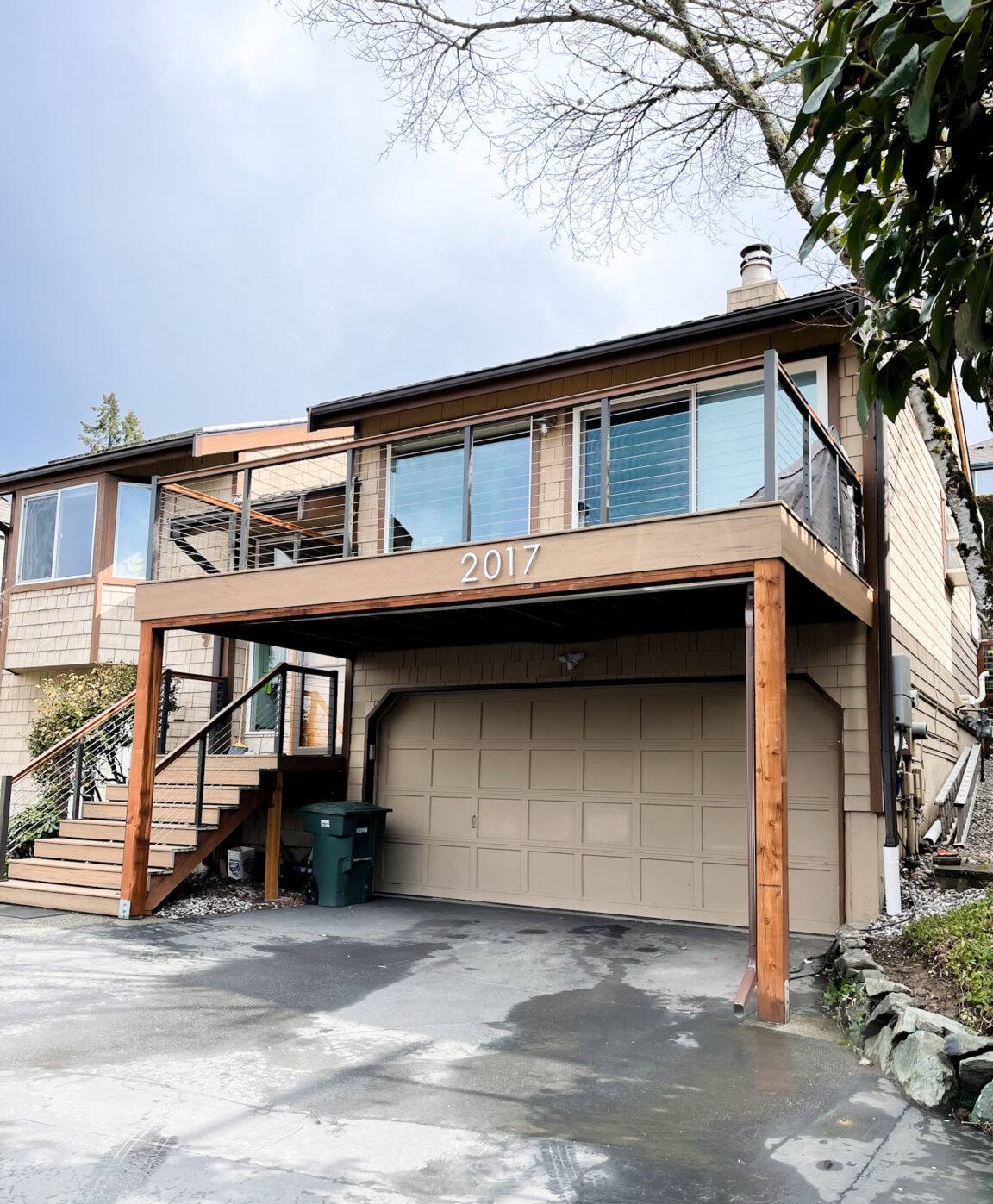
How Salt Air, Rain, and Moss Damage a Deck
Salt Air and Metal Fasteners
Airborne salt accelerates corrosion in nails, screws, joist hangers, and structural connectors. Once a fastener starts rusting, it loses grip strength long before the rust is visible from the surface. This is one of the most common hidden problems we find on Columbia decks — boards that look fine but are barely held down because the screws underneath have corroded through.
Driving Rain and Water Intrusion
Wind-driven rain doesn't just fall on a deck, it gets pushed sideways into seams, ledger board connections, and any gap where flashing has failed. Water that gets behind a ledger board or under a rail post base can rot framing members from the inside, well before the exterior wood shows obvious damage.
Moss, Algae, and Trapped Moisture
Shaded or north-facing decks in this climate grow moss and algae readily, especially where tree canopy limits sun exposure. Beyond being slippery and unsightly, moss holds moisture against the wood surface far longer than bare wood would dry on its own, which speeds up rot in the boards themselves and in the substructure underneath.
Signs Your Columbia Deck Needs Repair
Most deck problems give warning signs well before they become safety issues. Homeowners in this neighborhood should watch for:
- Boards that feel spongy, springy, or noticeably softer underfoot than the rest of the deck
- Rust stains bleeding out around screw heads or nail holes
- Gaps or movement where the deck attaches to the house (the ledger board connection)
- Wobbly or loose railing posts, especially near stair connections
- Persistent moss or algae that returns quickly after cleaning
- Discoloration or dark staining at board ends, which often signals trapped moisture
- Visible daylight gaps where flashing has pulled away from the house siding
- Stairs that feel less solid than they used to, or squeak under normal use
Any one of these on its own might be minor. Several appearing together, or appearing near the same area of the deck, usually points to a structural issue worth having inspected properly rather than patched cosmetically.
What a Correct Deck Repair Actually Involves
A repair that only replaces the boards you can see is a cosmetic fix, not a real repair. Done right, deck repair work in this climate addresses the structure underneath first, because that's what determines whether the deck is actually safe and how long the fix will last.
Structural Inspection First
Before any boards come off, we check the framing: joists, beams, posts, and the ledger board connection to the house. This is where rot caused by trapped moisture does the most damage, and it's almost always invisible until you look underneath or probe the wood directly.
Fastener and Hardware Review
Given how hard salt air is on metal, we check joist hangers, structural screws, and connector hardware for corrosion, not just the visible deck screws. Corroded structural hardware gets replaced with fasteners rated for exterior and coastal-adjacent exposure, not standard interior-grade hardware.
Flashing and Water Management
Where the deck meets the house is the single most common failure point we see. Proper flashing directs water away from the ledger board and the house's wall assembly. If flashing is missing, damaged, or was never installed correctly, that gets corrected as part of the repair, not left for the next contractor to deal with.
Surface Repair or Replacement
Once the structure is sound, damaged decking boards, railings, and stair treads get replaced to match the existing deck as closely as possible, or upgraded to a lower-maintenance material if that's the right call for the homeowner's goals and budget.
Repair or Replace? How We Help You Decide
Not every deck problem calls for a full rebuild, and not every deck is worth patching indefinitely. The right call depends on how much of the structure is still sound.
| Factor | Repair Usually Makes Sense | Replacement Usually Makes Sense |
|---|---|---|
| Framing condition | Joists and beams are solid; damage is isolated | Rot has spread through multiple framing members |
| Ledger board | Connection is intact, flashing can be corrected | Ledger board itself is rotted or improperly attached |
| Age of deck | Under 15-20 years, built to a reasonable standard | Original construction is old or was never built to current code |
| Extent of damage | Limited to a few boards, a rail section, or stairs | Damage recurs across multiple areas or seasons |
| Budget goals | Homeowner wants to extend life of existing deck | Homeowner wants a longer-term, lower-maintenance solution |
We'll always give you a straight answer on which category your deck falls into. There's no benefit to us talking a homeowner into a full replacement when a targeted repair will hold up fine, and no benefit to patching something that's going to need the same fix again next year.
Our Repair Process
1. On-Site Inspection
We look at the deck from underneath as well as from the surface, checking framing, fasteners, flashing, and drainage, not just the boards that show obvious wear.
2. Clear, Written Scope
You get a plain-English explanation of what's actually wrong, what needs to be repaired versus replaced, and why, before any work starts or any price is finalized.
3. The Repair Work
We address the structure first, correct any flashing or water-management issues, then move to surface repairs and finish work. Fasteners and hardware are matched to the exposure the deck actually faces, not generic hardware-store defaults.
4. Final Walkthrough
Before we consider the job done, we walk the deck with you, point out what was repaired and why, and flag anything worth keeping an eye on going forward.
Materials That Hold Up in This Climate
Material choice matters as much as workmanship when a deck faces salt air and constant moisture. For structural hardware, we use fasteners and connectors rated for exterior and corrosive-adjacent environments rather than standard galvanized options, since standard hardware is exactly what tends to fail first near the coast. For decking surfaces, both quality pressure-treated wood and composite materials can perform well here, but each comes with real trade-offs worth understanding upfront.
Wood decking is more affordable initially and easier to repair board-by-board later, but it requires regular cleaning and sealing to resist moss and moisture in this climate. Composite decking generally resists moss and moisture better with less upkeep, but it carries a higher upfront cost and, depending on the product, can be less forgiving to repair in small sections. We'll walk you through the honest trade-offs for your specific deck and budget rather than pushing one material as a blanket answer.
Maintenance That Extends a Repair's Lifespan
A good repair lasts longer with a small amount of upkeep, especially in a climate with a real moss season. We recommend:
- Clearing leaves and debris from between boards regularly, especially in fall
- Cleaning moss and algae off the surface before it builds up a slick layer
- Checking that gutters and downspouts near the deck aren't dumping extra water onto it
- Re-sealing or re-staining wood decking on the schedule the product calls for, not just when it looks faded
- Doing a quick visual check under the deck once a year for new soft spots or rust
Why Hire a Crew That Already Works in Columbia
Deck problems in this neighborhood follow patterns tied to its specific mix of tree cover, home age, and exposure to Bellingham's weather off the bay. A crew that already works in Columbia has seen how these decks fail here specifically, which means less time spent guessing and more time spent fixing the actual problem. We're also a phone call away if something needs a follow-up look after the job is done, rather than a crew that did one job in the area and moved on.
If your deck has soft spots, rust stains, moss that won't quit, or just doesn't feel as solid as it used to, we're happy to take a look. Reach out for a free, no-pressure estimate using the form below, and we'll give you a straight assessment of what your deck actually needs.