 Bellingham
 Why Decks in Sunnyland Wear Out Faster Than You'd Expect
Sunnyland sits close enough to Bellingham Bay that salt-laden air, driving rain off the water, and long stretches of shade under mature trees all work against an outdoor deck at the same time. A deck built the same way you'd build one in a drier inland climate often looks fine for a few years, then starts failing from the inside out — soft joists, rusted fasteners, and a surface that stays slick with moss more months than not. By the time the boards themselves look bad, the structure underneath is usually already compromised.
We replace decks throughout Bellingham and Whatcom County, and the ones we see fail early in Sunnyland almost always share the same root cause: water that had nowhere to go. Flashing that was skipped or installed wrong, framing that never had a chance to dry between rains, and decking laid tight enough to trap moisture instead of shedding it. A correct replacement fixes that, not just the cosmetic surface.
Signs a Repair Won't Cut It Anymore
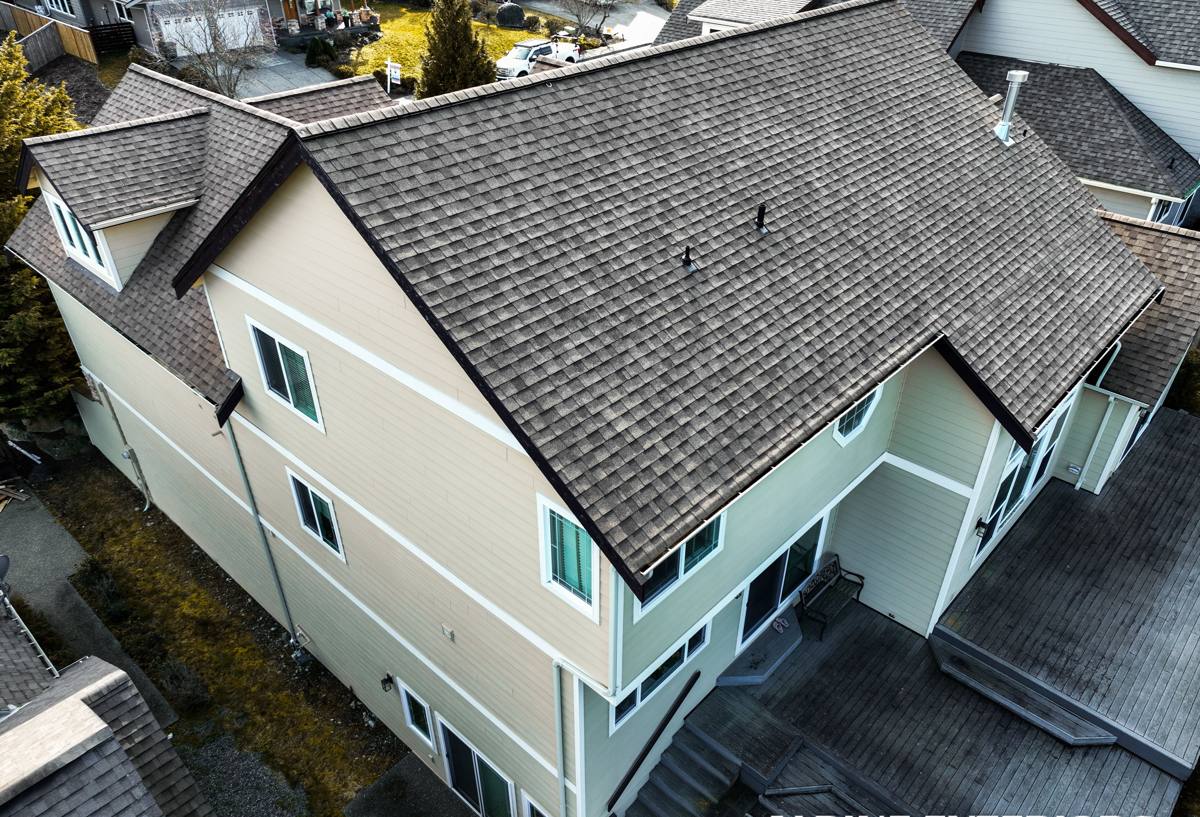
Homeowners often ask us to patch a board or two before realizing the whole structure needs attention. A repair makes sense when the problem is isolated. Replacement is the honest recommendation when the issues below show up together, because they point to a structure that's failing as a system, not a surface that just needs fresh boards.
- Joists or beams that feel spongy or give slightly underfoot, especially near the ledger board or stair stringers
- Persistent moss or algae growth that returns within weeks of cleaning, even in areas that get some sun
- Rust streaks below fastener heads, or screws that spin freely without biting into wood
- Gaps opening between deck boards and the house, or a ledger board that shows staining or soft wood
- Railings that flex or wiggle at the post base — a structural issue, not a cosmetic one
- A deck older than 15–20 years that has never had the framing inspected, only the surface refinished
If you're only seeing one or two of these, a targeted repair may still be the right call, and we'll tell you that honestly during an assessment rather than push a full rebuild you don't need.
What a Correct Deck Replacement Actually Involves
Ledger Board and Flashing
The ledger — the board that attaches the deck to the house — is the single most common failure point we find on older Bellingham decks. In a climate with this much sustained rain, a ledger without proper flashing acts like a funnel, directing water behind the siding and into the rim joist for years before anyone notices. Every replacement we do starts here: correct flashing, proper fasteners rated for the connection, and a gap or drainage path so water can't pool against the house.
Framing and Joists
We frame with lumber rated for ground contact where it matters, use structural connectors instead of relying on nails or toe-screws at load points, and space joists to match the decking material — composite and PVC boards often need tighter joist spacing than wood to avoid flexing over time. Post bases are set to keep wood off standing water, which matters more in Sunnyland's shaded, slower-drying yards than it does on an open, sun-exposed lot.
Decking Surface
The visible boards get the attention, but they're the last thing installed, not the first decision. What holds up under Whatcom County's moss season has more to do with airflow underneath the deck and gapping between boards than it does with the brand printed on the board.
Choosing a Decking Material for This Climate
There's no single right answer here — it comes down to how much maintenance you're willing to do and how the deck sits relative to sun, shade, and drainage. We'll walk through the honest trade-offs for your specific site rather than push one product line.
| Material | Moss & Moisture Behavior | Maintenance | Typical Lifespan |
|---|---|---|---|
| Pressure-treated wood | Absorbs moisture; needs airflow underneath and regular sealing to resist moss and rot | Annual cleaning and re-sealing recommended | 10–15 years with upkeep |
| Cedar | Naturally rot-resistant but still needs sealing in a wet, shaded lot; grays and softens without maintenance | Sealing every 1–2 years | 15–20 years with upkeep |
| Capped composite | Doesn't absorb water like wood, but still needs airflow underneath and periodic washing to keep algae from clinging to the surface texture | Occasional washing, no sealing | 25–30 years |
| PVC / cellular decking | Fully synthetic, sheds moisture well, least prone to trapped moisture issues | Occasional washing | 25–30+ years |
Whatever material you choose, we install it with proper board spacing and hidden fastener systems that don't create the tight seams where moss and grime like to collect in a climate this wet.
Our Deck Replacement Process
1. On-Site Assessment
We look underneath the deck, not just at the surface — checking ledger condition, post footings, and how water currently drains off the site. This is where we tell you honestly whether you need a full replacement or something less.
2. Design and Material Selection
We talk through decking material, railing style, and layout based on your budget and how you actually use the space, then put it in writing before any work starts.
3. Permitting
We handle the permit application with the City of Bellingham or Whatcom County, depending on where your property falls, so the structure is inspected and documented correctly.
4. Demolition and Structural Rebuild
Old decking, framing, and ledger connections are removed down to a clean structure, with any rot in the rim joist or house framing addressed before we rebuild — not covered over.
5. Decking Installation and Final Walkthrough
We install the surface material, railings, and stairs, then walk the finished deck with you to confirm drainage, fastener quality, and finish before we consider the job done.
Permits and Code in Bellingham and Whatcom County
Most full deck replacements — especially anything involving structural framing, footings, or a deck more than 30 inches off the ground — require a building permit. Homeowners sometimes assume a like-for-like replacement is exempt, but if the ledger connection, footings, or railings are being redone, it typically isn't. We pull the appropriate permit and schedule inspections as part of the job rather than leaving that step to you, which also protects you if the deck is ever reviewed during a home sale.
What Affects the Cost of a Deck Replacement
Every deck is different, so we won't quote a number without seeing the site, but these are the factors that move the price most:
| Factor | Why It Matters |
|---|---|
| Deck size and shape | More square footage and complex angles increase material and labor time |
| Decking material | Composite and PVC cost more upfront than wood but less over the deck's life |
| Height and stairs | Elevated decks and multi-run stairs add framing complexity and railing code requirements |
| Ledger and framing condition | Rot found in the rim joist or house framing during demo adds repair scope |
| Site access and drainage | Sloped or shaded Sunnyland lots sometimes need extra grading or drainage work to keep the new deck dry |
We provide a written estimate that breaks these factors down so you know what you're paying for, not just a bottom-line number.
Why It Matters to Hire a Crew That Already Works in Sunnyland
A deck built to a generic national spec doesn't account for how much rain this area gets or how long moss season really runs here. Crews unfamiliar with Bellingham's conditions sometimes under-flash a ledger or skip the airflow gap under decking that keeps boards from staying wet for days at a stretch — details that don't show up as a problem until a few winters have passed. Working this neighborhood regularly means we've already seen which shortcuts fail here and build around them from the start, not after a callback.
Keeping a New Deck Performing Long-Term
A correctly built deck still needs some seasonal attention in this climate. Clear leaves and debris from between boards before the fall rains set in, keep gutters and downspouts near the deck flowing so water isn't dumping onto it, and rinse off algae buildup before it has a chance to establish, particularly on shaded sections. Composite and PVC owners can generally stop there; wood decks will still need periodic sealing to hold up through repeated wet-dry cycles.
If your Sunnyland deck is showing soft spots, persistent moss, or is simply old enough that you're not sure what's underneath the boards, we're happy to take a look and give you a straight answer — repair, replace, or leave it alone. Reach out for a free, no-pressure estimate using the form below.