 Bellingham
 Why Happy Valley Windows Wear Out Faster Than the Brochure Says
Happy Valley sits close enough to Bellingham Bay that salt-laden air is a daily fact of life for anything painted, sealed, or caulked on the outside of a house. Add Whatcom County's long wet season — months of driving rain pushed sideways by wind off the water — and a mature tree canopy that keeps many yards shaded and damp well into summer, and you get a climate that is genuinely harder on windows than most manufacturers design for. Frames that would last two decades in a dry inland climate can show rot, seal failure, or fogged glass in half that time here if they weren't installed with this specific combination of moisture and salt in mind.
Moss is the most visible symptom. It doesn't just grow on roofs — it colonizes window sills, exterior trim, and anywhere water sits instead of draining. Where moss and standing moisture take hold around a window opening, they hold water against wood trim and siding long after the rain stops, which is exactly the condition that leads to rot behind the frame. This is a Bellingham-specific problem, and it's one reason we treat window replacement here differently than we would in a drier part of the state.
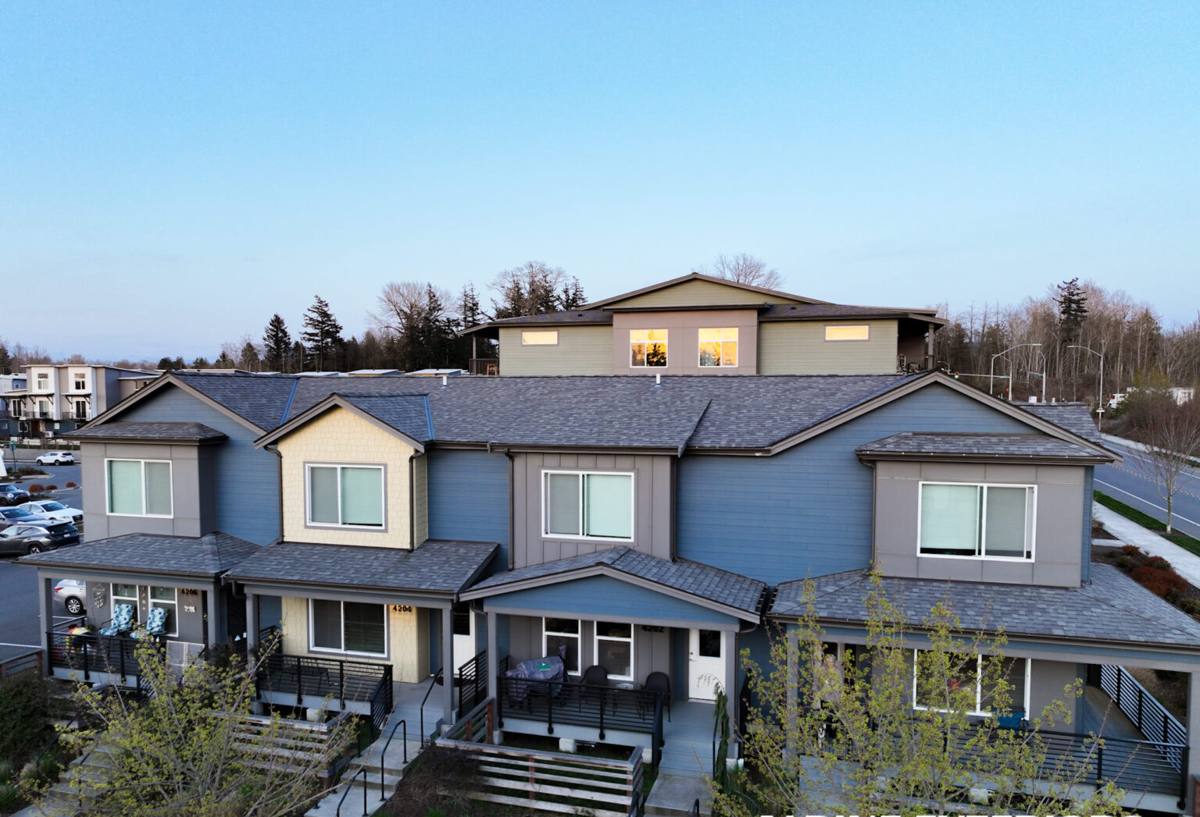
Signs a Happy Valley Home Needs New Windows
Many homes in this neighborhood are older housing stock, which means a lot of original or early-replacement windows are well past their useful life even if they don't look obviously broken. Here's what we look for during an assessment:
- Visible condensation or fogging between the panes of a double-pane window (a sign the seal has failed and the gas fill is gone)
- Soft or discolored wood trim around the window opening, especially at the bottom sill
- Moss or dark streaking on the sill or exterior casing that keeps coming back after cleaning
- Drafts you can feel with a hand near the frame on a windy day
- Windows that are difficult to open, close, or lock — often a sign the frame has shifted or swollen
- Noticeably higher heating bills in winter compared to similar-sized homes nearby
- Single-pane glass anywhere in the home, which almost never makes sense to keep given our climate and energy costs
Any one of these on its own might not mean much. Two or three together, especially on a home's north or west-facing walls where wind-driven rain hits hardest, usually means it's time for a real conversation about replacement rather than another round of caulk and paint.
What "Energy-Efficient" Actually Means Here
The phrase gets used loosely in the window industry, so it's worth being specific about what actually matters for a Happy Valley home. Three numbers do most of the work:
- U-factor — how well the window resists heat loss. Lower is better. This is the number that matters most for keeping heating bills down through our long, mild-but-damp winters.
- Solar Heat Gain Coefficient (SHGC) — how much solar heat passes through the glass. In our cloudy climate this matters less than it would in a sunnier region, but orientation still affects the right choice window by window.
- Air leakage rating — how much air passes through the assembly itself, independent of the glass. A well-rated window with a poorly sealed installation will still leak air, which is why the installation matters as much as the product.
Beyond the glass package, gas fills (argon is standard; krypton shows up in narrower triple-pane units), the number of low-E coatings, and the spacer material between panes all affect long-term performance and how well the seal holds up under constant moisture exposure — which is the real test in this climate, more than any lab rating.
Double-Pane vs. Triple-Pane for This Climate
| Factor | Double-Pane Low-E | Triple-Pane |
|---|---|---|
| Upfront cost | Lower | Higher, often 15-25% more |
| Insulating performance | Good for our mild winters | Better, but diminishing returns in a climate that rarely sees hard freezes |
| Weight / frame stress | Standard | Heavier — needs a frame and hardware rated for it |
| Where it makes the most sense | Most Happy Valley homes | North-facing walls, homes near busier roads (extra sound damping), or owners prioritizing max efficiency |
For most homes in this neighborhood, a quality double-pane low-E window with argon fill hits the right balance of performance and cost. Triple-pane is a legitimate upgrade, not a marketing gimmick, but it's a decision we make window-by-window based on orientation and budget rather than a blanket recommendation.
Frame Material: The Decision That Matters Most for Salt Air and Rain
Glass performance gets the attention, but frame material is what determines how the window holds up to years of salt air and wind-driven rain.
- Vinyl — the most common choice, and for good reason: it doesn't rot, doesn't need repainting, and handles moisture well when the welds and reinforcement are good quality. Lower-grade vinyl can warp or discolor over time, so we're selective about which lines we install.
- Fiberglass — dimensionally stable across temperature swings, very resistant to moisture and salt exposure, and typically the longest-lasting option. It costs more upfront, which is the honest trade-off.
- Wood and wood-clad — still chosen for historic character or architectural matching, but wood is the material most vulnerable to the rot risk described earlier. If a homeowner wants the wood look, we push hard on proper flashing and factory-clad exteriors rather than exposed painted wood, because unclad wood exterior trim in this climate is a maintenance commitment, not a one-time purchase.
- Aluminum — durable and low-maintenance, but a poor insulator unless it has a thermal break, which makes it a rare recommendation for an energy-efficiency-focused project.
We'll walk through these trade-offs honestly rather than steering everyone toward one product line — the right frame material depends on the specific wall, exposure, and budget.
How We Handle a Window Replacement
The window unit itself is only part of the job. What actually determines whether a window performs well for the next 20-plus years is how the opening is prepared, flashed, and sealed. Our process:
- On-site assessment — we check the condition of the existing frame, trim, and sheathing behind it before quoting anything, since hidden rot changes the scope.
- Removal — old windows and any compromised trim come out carefully to expose the rough opening for inspection.
- Rot and moisture check — any soft sheathing or framing found at this stage gets addressed before a new window goes in. Installing a new window over a wet or rotten opening just hides the problem.
- Flashing and weather barrier — proper flashing tape and pan flashing at the sill, integrated with the home's existing weather-resistive barrier, is what actually keeps driving rain out. This step is the single biggest factor in long-term performance in our climate.
- Setting and shimming the unit — squared, plumb, and shimmed correctly so the window operates smoothly and seals evenly for its full lifespan.
- Sealing and insulating the gap — low-expansion foam or backer rod and sealant around the frame, sized correctly so it doesn't bow the frame or leave gaps.
- Exterior trim and finish work — trim reinstalled or replaced and finished to shed water, with attention to the sill detail where moss and standing water tend to collect.
- Final check and cleanup — operation, locks, and seals tested, and the work area left clean.
Why the Installation Matters More Than the Brand Name
We've seen good windows fail early because of poor flashing, and we've seen mid-grade windows perform well for decades because the installation was done right. In a climate that sends rain sideways for months at a time, the flashing and sealing details around the window are doing as much work as the glass itself. This is also where most warranty disputes come from — a manufacturer's warranty typically covers the window unit, not water damage caused by a flashing mistake during installation, which is a distinction worth understanding before you sign anything.
Why Local Experience in Happy Valley Specifically Matters
Happy Valley's mix of older homes, hillside lots, and mature tree cover creates a few recurring conditions that a crew unfamiliar with the neighborhood might not anticipate:
- Older homes often have non-standard rough openings that don't match modern window sizing, which affects both cost and lead time on the order
- Hillside and sloped lots can complicate access, staging, and disposal logistics compared to a flat-lot job
- Heavier tree cover means more organic debris and moss buildup around window openings, which we account for during both assessment and ongoing maintenance recommendations
- The City of Bellingham has its own permitting requirements, and scope (like enlarging an opening or working on a designated historic structure) can trigger requirements homeowners don't expect
A crew that already works this neighborhood knows to check for these things upfront instead of discovering them mid-project.
What Affects the Cost of a Window Project
| Factor | Why It Moves the Price |
|---|---|
| Number and size of windows | Larger openings and full-house projects have different per-window economics than a single replacement |
| Frame material | Vinyl, fiberglass, and clad-wood carry different material costs |
| Glass package | Double vs. triple-pane, coatings, and gas fill all add cost for added performance |
| Hidden damage | Rotted sheathing or framing found during removal adds repair scope before the new window can go in |
| Access and site conditions | Hillside lots, second-story windows, or tight access can add labor time |
| Trim and finish work | Matching existing trim profiles or upgrading to low-maintenance materials affects the finish cost |
Broad ranges are useful for planning, but every home in this neighborhood has different window counts, sizes, and hidden conditions, which is why we give firm numbers only after an on-site look rather than a phone estimate.
Ready for an Honest Look at Your Windows?
If your Happy Valley home is dealing with drafty rooms, fogged glass, moss-stained sills, or rising heating bills, we're happy to come take a look and tell you honestly what we see — including if replacement isn't actually necessary yet. Estimates are free, there's no pressure, and you'll get straight answers about materials, cost factors, and timeline before you decide anything. Use the form below to get started.