 Bellingham
 James Hardie Siding for Silver Beach
Silver Beach is one of those Bellingham neighborhoods where the trees do a lot of the work of hiding the sky. That's part of why people live there, and it's also why siding takes a beating that a homeowner in a more open, sunbaked part of the country would never have to think about. Between tree cover holding moisture against exterior walls, driving rain off Bellingham Bay, salt-laden marine air working into seams and fastener heads, and a moss season that can run most of the year, Silver Beach homes need siding that was engineered for exactly this kind of climate — not siding that merely tolerates it.
This page is specifically about installing James Hardie fiber cement siding on Silver Beach homes: what the local climate actually does to a wall system, what a correct installation involves, how our process works from first visit to final walkthrough, and why it matters that the crew doing the work already knows this neighborhood.
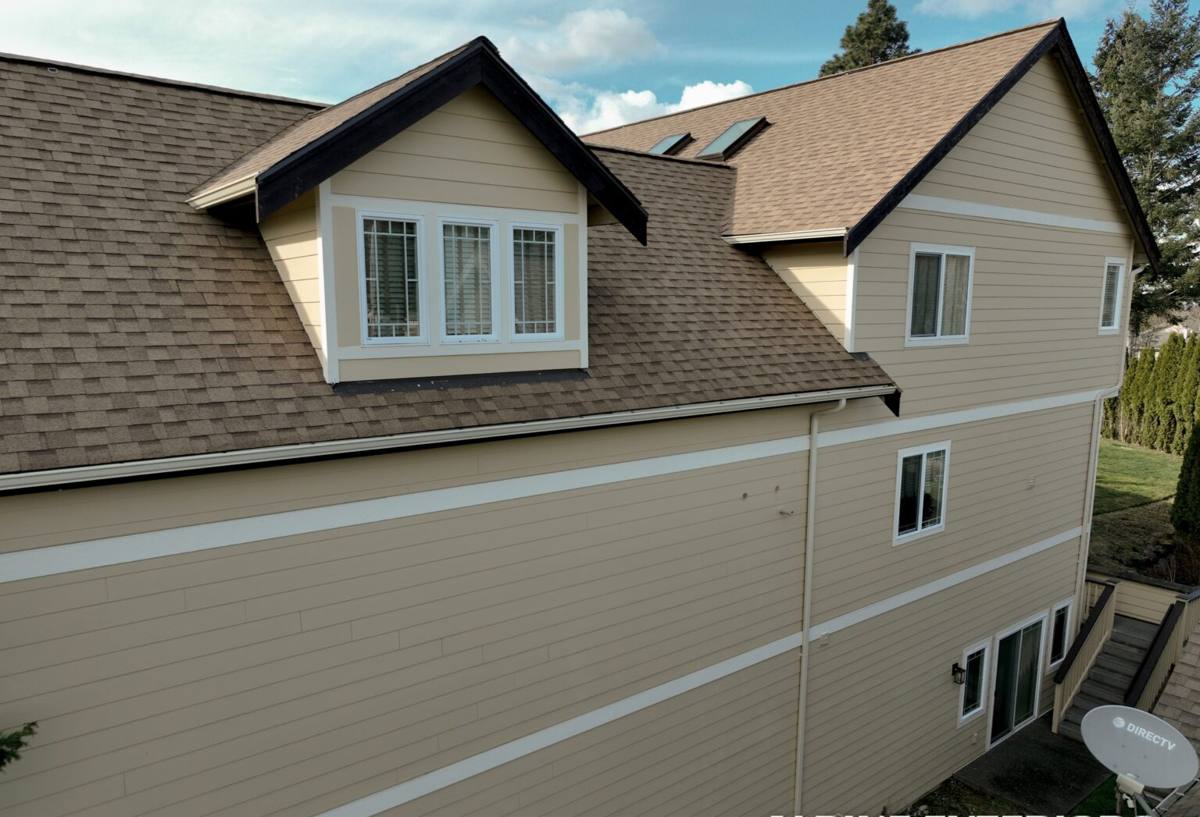
What Whatcom County's Climate Does to Siding
Every siding material has a failure mode, and in Whatcom County that failure mode is almost always moisture-related. A few things are working against your siding at the same time here:
- Driving rain: Wind-driven rain off the water pushes moisture sideways into laps, seams, and trim joints, not just straight down.
- Salt-laden marine air: Air moving inland off Bellingham Bay carries salt that accelerates corrosion on fasteners and metal flashing over the years.
- Shade and tree cover: Mature trees common around Silver Beach keep walls damp longer after rain, which is exactly the condition moss, algae, and mildew need to establish.
- A long, mild wet season: Instead of a short intense rainy season followed by dry months, this area gets extended stretches of low-grade dampness — the kind that doesn't look dramatic but never lets a wall fully dry out.
None of that is unique to Silver Beach specifically, but it's more pronounced here than in more open, sun-exposed parts of Bellingham, simply because of the tree cover and proximity to the water. Siding that depends on paint film integrity or that swells and rots when it stays wet is fighting an uphill battle in this exact setting.
Why Moss Season Matters More Than People Think
Moss isn't just a cosmetic nuisance. It holds water against the siding surface, and on materials that can absorb moisture or that rely on caulk and paint to stay sealed, that constant dampness shortens the material's working life. A siding system that resists moisture intrusion at the substrate level — not just at the surface — handles a long moss season far better than one that doesn't.
Why We Standardized on James Hardie
We install James Hardie fiber cement siding exclusively. We don't install vinyl, LP SmartSide, Cemplank, Allura, or unfinished wood siding like primed spruce or cedar. That's not a marketing position — it's a decision based on what actually holds up in this climate over the long haul.
James Hardie fiber cement is made from cement, sand, and cellulose fiber. It doesn't rot, it isn't a food source for the fungi that cause moss and mildew staining, and it's non-combustible, which matters given Whatcom County's dry-season wildfire risk in surrounding areas. Hardie's ColorPlus finish is baked on at the factory under controlled conditions, which gives it better fade and chip resistance than field-applied paint — an important detail here, since repainting a heavily shaded, hard-to-reach exterior wall isn't something most homeowners want to do every few years.
Hardie also engineers its products by climate zone. The HZ5 product line is formulated for the wetter, harsher climates found across the Pacific Northwest, with moisture and freeze-thaw performance built into the formulation rather than added on afterward. That's the line we use on Silver Beach homes.
What We Tell Homeowners About Alternatives
Vinyl is inexpensive and low-maintenance in the sense that it doesn't need painting, but it can warp in temperature swings, fade unevenly over time, and it's a poor match for a market where buyers expect a more substantial, higher-end exterior. LP SmartSide and other engineered wood products perform reasonably well when installation and maintenance are followed to the letter, but they're wood-based, meaning moisture intrusion at a cut edge or fastener point can lead to swelling and deterioration — a real risk in a climate this wet. Unfinished wood siding like cedar or primed spruce looks great on day one but demands an ongoing maintenance commitment — recoating, caulking, spot repairs — that most homeowners underestimate until they're several years in. We'd rather put a product on your home that doesn't force that trade-off.
What a Correct Installation Actually Involves
Fiber cement siding is only as good as the installation behind it. Hardie's own warranty is conditioned on installation to their specifications, and in a climate like this, cutting corners on the details is exactly where problems start. A correct job on a Silver Beach home includes:
- Proper clearance between the bottom edge of siding and grade, decks, or roof lines, so water doesn't wick up into the material
- Weather-resistant barrier and flashing installed and lapped correctly at every window, door, and penetration before siding goes on
- Correct fastener type, spacing, and depth — over-driven or under-driven nails are a common source of early failure
- Proper joint treatment at butt joints and corners, sealed to Hardie's specification rather than just caulked over
- Rain screen or drainage plane detailing appropriate to the wall assembly, so incidental moisture has somewhere to go
- Factory-cut or properly sealed field cuts, since an unsealed cut edge is one of the most common places fiber cement takes on moisture
Every one of those details matters more in Silver Beach's shaded, damp microclimate than it would in a drier part of the state, because a mistake doesn't get baked out by sun and low humidity the way it might elsewhere — it just stays wet.
Our Process, Start to Finish
We keep the process straightforward and don't ask homeowners to make decisions they don't have enough information to make yet.
- On-site assessment: We walk the exterior, check the condition of the existing siding and sheathing, and look specifically for moisture damage around windows, at grade level, and anywhere shade keeps the wall damp longer.
- Scope and product selection: We recommend the Hardie product line, profile, and color that fits the home and the site conditions, and we explain why.
- Written estimate: A clear, itemized quote — no vague allowances that turn into surprises later.
- Prep and tear-off: Removal of existing siding, inspection of the sheathing underneath, and repair of any rot or damage found before anything new goes on.
- Weather barrier and flashing: The unglamorous but most important step — done to spec, not eyeballed.
- Hardie installation: Siding, trim, and accessories installed per manufacturer specification, with attention to the fastening and joint details above.
- Final walkthrough: We go over the finished work with you before calling the job done.
Choosing the Right Hardie Product for a Silver Beach Home
Hardie makes several distinct product lines, and the right one depends on the home's architecture and exposure as much as personal taste.
| Product | Look | Best suited for |
|---|---|---|
| HardiePlank lap siding | Traditional horizontal lap | Most home styles; the most common choice in this area |
| HardieShingle | Staggered or straight-edge shingle look | Craftsman and cottage-style homes wanting texture without real wood upkeep |
| HardiePanel | Vertical panel with battens | Modern facades, accent walls, gable ends |
| HardieTrim | Smooth or textured trim boards | Window/door surrounds, corners, fascia — pairs with any of the above |
Most Silver Beach projects we quote end up as HardiePlank in the field with HardieTrim details and sometimes a HardieShingle or HardiePanel accent, but the right combination really does depend on the specific house.
Cost Factors on a Silver Beach Project
We don't publish flat per-square-foot pricing because it varies too much by house, but these are the factors that actually move the number on a Silver Beach job:
| Factor | Why it matters here |
|---|---|
| Extent of existing damage | Rot found under old siding at tear-off adds sheathing repair before new siding can go on |
| Home height and access | Multi-story sections, steep slopes, or limited side-yard access affect labor and staging |
| Product line and profile | Shingle and panel profiles generally cost more in material and labor than standard lap |
| Trim complexity | Homes with more windows, corners, and architectural detail take more trim work |
| Color and finish | Factory ColorPlus finishes cost more up front than field paint but remove a recurring repaint expense |
We'll walk through all of this during the on-site estimate so you understand where your number is coming from, not just what it is.
Maintenance: What You Actually Need to Do
One of the real advantages of James Hardie in this climate is how little ongoing maintenance it demands compared to wood-based alternatives. That said, "low-maintenance" doesn't mean "no-maintenance." A short, honest list:
- Rinse the siding occasionally, especially on shaded sides where moss and algae are more likely to establish
- Keep gutters clear so overflow doesn't run down the wall face repeatedly in one spot
- Trim back vegetation and tree limbs that hold branches or leaves against the siding
- Re-caulk joints if you notice cracking or separation, rather than waiting for water to get behind it
- Have any impact damage or cracked boards repaired promptly rather than leaving an opening for moisture
Compare that to a wood-based product needing periodic recoating and caulk renewal on every exposed surface, and the time difference over a 10 or 20-year span is significant.
Why It Matters That We Already Work in Silver Beach
A crew that's worked this specific neighborhood knows which sides of a house tend to hold moisture longest, how the tree cover on a given street affects moss growth, and what flashing details tend to get missed on homes of a certain age and construction type common around here. That's not something you can fully substitute with a generic installation checklist — it comes from having done the work in this exact microclimate, on homes with the same exposure and shade patterns your house has. We'd rather bring that specific experience to your project than treat Silver Beach like any other job site.
If you're weighing a siding replacement or repair in Silver Beach, we're happy to walk your property, look at what's actually going on with your current siding, and give you a straightforward, no-pressure estimate using the form below.