 Bellingham
 Lynden's Climate Puts Real Demands on a Roof
Lynden sits in the Nooksack River valley, a few miles inland from Bellingham Bay, but that doesn't spare it from the same weather patterns that wear down roofs across Whatcom County. Wet Pacific systems roll in off the water and push rain sideways for days at a time, and even set back from the coast, the air that moves through the valley still carries salt off the Sound during storm cycles. Add in the shade from mature trees along many Lynden properties and the moisture that collects in low-lying farmland, and you get a long moss season that can run from late fall well into spring.
None of that is a reason to panic about your roof. It's a reason to make sure the roof you have, or the roof you're about to install, is built for these specific conditions rather than a generic climate. A roof that would hold up fine in a dry inland state can fail early here if the details — ventilation, underlayment, flashing, material choice — aren't matched to driving rain and sustained dampness.
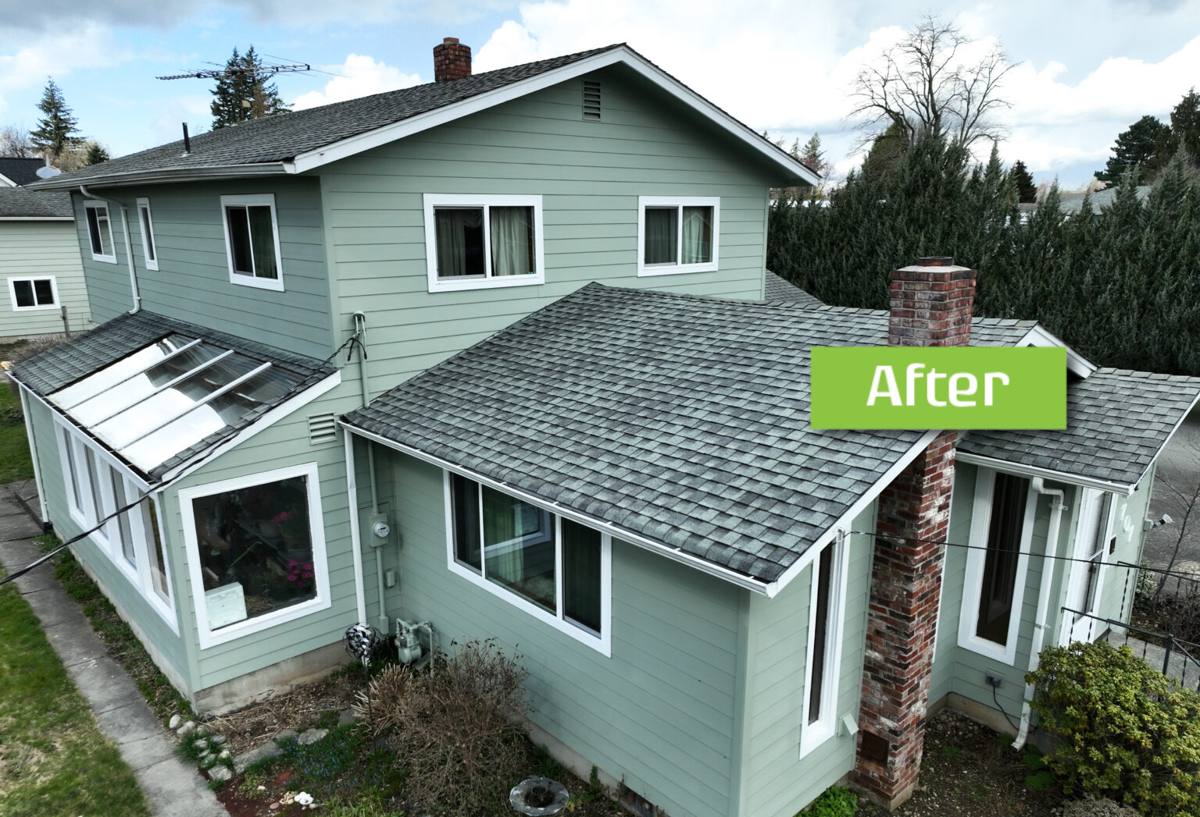
Signs Your Lynden Roof Is Telling You It's Time
Most roofs don't fail all at once. They give warning signs for months, sometimes years, before a leak shows up inside the house. Homeowners in Lynden should watch for:
- Shingles that are cupping, curling at the edges, or missing granules in the runoff at your downspouts
- Dark streaking or thick moss growth, especially on north-facing slopes or under tree cover
- Soft spots or noticeable sagging when you look down the roofline from the ground
- Daylight visible through the roof deck from inside the attic
- Rusted, lifted, or missing flashing around chimneys, vent pipes, and skylights
- Interior ceiling stains that come and go with heavy rain rather than a single storm
- A roof that's 20+ years old and has never had a full tear-off, only patch repairs
Any one of these on its own might just need a repair. Several at once, or a roof approaching the end of its rated life, usually means it's more cost-effective to replace than to keep chasing leaks.
What a Correct New Roof Installation Actually Involves
A new roof is more than laying shingles over a deck. In a climate that gets as much sustained rain as Whatcom County does, the parts you never see matter more than the parts you do.
Tear-Off and Deck Inspection
We remove the old roofing down to bare decking rather than layering over it. That's the only way to actually see the plywood or plank sheathing underneath, which is where hidden rot and water damage usually hide after years of slow leaks. Any soft, delaminated, or water-stained decking gets replaced before anything new goes down — this is the step that gets skipped by crews trying to save time, and it's the one that causes problems five years later.
Underlayment and Water Protection
Underneath the visible roofing material, we install a water-resistant underlayment across the whole roof, with self-adhering ice-and-water membrane reinforced along eaves, valleys, and any low-slope transitions — the spots where wind-driven rain is most likely to work its way backward under the shingles. This layer is what protects the house even if wind or age eventually compromises the top layer.
Flashing Details
Chimneys, skylights, vent pipes, and wall-to-roof transitions are where most leaks actually start, not in the open field of shingles. Correct flashing means new metal at every penetration, step flashing woven properly at wall intersections, and counter-flashing that sheds water outward instead of channeling it toward a seam.
Ventilation
A roof needs to breathe. Balanced intake at the eaves and exhaust at the ridge keeps attic moisture from condensing on the underside of the deck, which is a major driver of both rot and the kind of algae growth that thrives in Whatcom County's damp climate.
Choosing the Right Roofing Material for Lynden
There's no single "best" roofing material — the right choice depends on your budget, your roof's exposure to shade and moisture, and how long you plan to be in the home. Here's how the common options compare for our climate specifically:
| Material | Typical Lifespan | Moss & Moisture Performance | Notes for Lynden |
|---|---|---|---|
| Architectural asphalt shingle | 25-30 years | Good, especially algae-resistant lines | Best balance of cost and durability for most homes; our standard recommendation |
| Standing seam metal | 40-50+ years | Excellent — sheds moss and water fast | Higher upfront cost, very low maintenance, sheds heavy rain well |
| Cedar shake | 20-30 years with upkeep | Poor without diligent maintenance | We generally steer clients away from it here — the sustained dampness and shade common in Lynden accelerate moss and rot, and the upkeep burden is significant |
| Synthetic composite shingle/shake | 40-50 years | Good | Wood look without wood's moisture sensitivity; higher material cost |
We'll be direct about cedar shake: it can look great, but between the shade many Lynden lots get from mature trees and the length of our moss season, it's a high-maintenance product in this specific climate. If you love the look, a synthetic shake product gets you close without the same upkeep.
Our Installation Process, Step by Step
- On-site inspection and estimate. We walk the roof (or use ground/ladder inspection when access is limited), check the attic for ventilation and moisture issues, and give you a written estimate with material options.
- Material selection. We go over the tradeoffs for your specific roof — slope, sun/shade exposure, and budget — so you're choosing based on your house, not a sales pitch.
- Scheduling around weather. We plan installs for stretches of manageable weather where possible and keep the roof dried-in at the end of every work day, so a surprise squall doesn't turn into water in your living room.
- Tear-off and deck repair. Old material comes off, decking is inspected, and any damaged sheathing is replaced before we move forward.
- Underlayment, flashing, and ventilation installation. This is where the roof's actual durability is decided.
- Roofing material installation per manufacturer specifications, to keep material warranties valid.
- Cleanup and final walkthrough. Magnetic sweep for nails, hauling of old material, and a walkthrough so you know exactly what was done.
Moss, Algae, and Keeping It From Coming Back
Whatcom County's long moss season is a product of shade, humidity, and mild temperatures that never really let roofs dry out for long stretches in the winter and early spring. A new roof won't make moss impossible, but a correctly installed one makes it far less likely and far easier to manage:
- Algae-resistant shingles (embedded with copper granules) resist the black streaking common on north-facing slopes
- Proper ridge and soffit ventilation keeps the roof deck from staying damp from underneath
- Zinc or copper control strips near the ridge release trace amounts of metal ions that discourage new moss growth as rain washes over them
- Keeping overhanging branches trimmed back reduces shade and debris buildup, both of which feed moss
We'll talk through these options at the estimate stage rather than assuming every roof needs every add-on — a roof with heavy tree cover benefits far more from control strips than one in full sun.
What Drives the Cost of a New Roof
Every roof is different, so we don't quote sight-unseen, but these are the main factors that move the number up or down:
| Factor | Why It Matters |
|---|---|
| Roof size and pitch | More square footage and steeper slopes both increase material and labor |
| Number of layers to remove | Tearing off multiple old layers takes more labor and disposal cost than a single layer |
| Decking condition | Rotted or soft sheathing found during tear-off needs replacement before roofing goes on |
| Material choice | Asphalt, metal, and synthetic products carry different material costs and install labor |
| Roof complexity | Valleys, dormers, skylights, and multiple penetrations add flashing work and time |
| Access | Steep sites, limited driveway access, or tall multi-story sections affect equipment and labor needs |
We give a firm, written estimate after inspecting your specific roof, not a rough number over the phone — too many of those factors can only be judged in person.
Why Hiring a Crew That Already Works in Lynden Matters
Roofing crews who mostly work drier inland climates sometimes underbuild for what Whatcom County actually throws at a house — lighter underlayment, minimal flashing detail, ventilation that's technically code but not generous enough for our humidity. A crew that regularly works Lynden and the surrounding valley knows which slopes hold moss longest, which older homes tend to have undersized attic ventilation, and where wind-driven rain during a fall storm actually tests a roof's flashing. That local pattern recognition is the difference between a roof that looks right on install day and one that's still performing correctly in year fifteen.
If your roof is showing its age or you're just planning ahead, we're happy to take a look and walk you through what we see — no pressure, no hard sell. Reach out for a free estimate using the form below, and we'll give you a straight answer on what your roof actually needs.