 Bellingham
 Why Siding in Sehome Has to Work Harder Than It Looks
Sehome sits close enough to Bellingham Bay to catch salt-laden air off the water, and close enough to Sehome Hill's tree cover to stay shaded and damp for long stretches of the year. That combination is tougher on exterior siding than either factor alone. Salt air accelerates corrosion on fasteners and metal trim. Shade slows drying time after every rain. Put them together on the same house, and you get a wall assembly that rarely gets a full day of sun and wind to dry out between storms.
A lot of the older homes in and around Sehome were sided decades ago with whatever product was standard at the time, then patched, repainted, or partially replaced as problems came up. That patchwork approach tends to catch up with a house eventually — cupping boards, soft spots at the bottom courses, paint that won't hold, or trim that's started to rot from the inside out. None of that is unusual for this neighborhood. It's just what happens when siding wasn't built or installed for Whatcom County's specific climate in the first place.
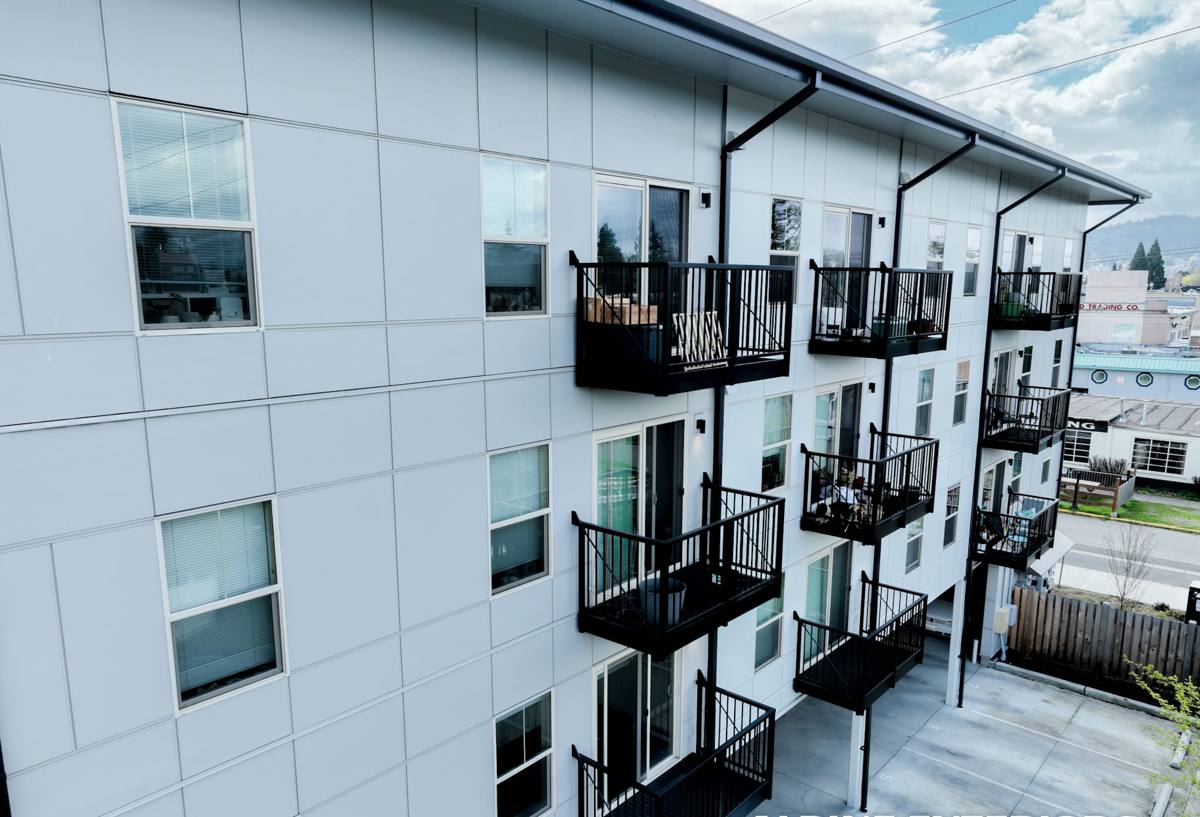
The Three Climate Factors Driving Siding Failure Here
Salt Air Off the Bay
Airborne salt doesn't just affect homes directly on the waterfront. It travels on wind and settles on siding, trim, and fasteners across the wider Bellingham area, including inland neighborhoods like Sehome. Over years, it accelerates corrosion of exposed metal — nail heads, flashing edges, hardware — and can contribute to premature paint and finish breakdown on products that weren't engineered to resist it.
Driving Rain and Wind-Driven Moisture
Whatcom County doesn't just get a lot of rain — it gets rain pushed sideways by wind off the Sound often enough that vertical surfaces take a real beating. Siding on the windward side of a Sehome home can see water driven up under laps and around trim edges, not just running straight down. If the water-resistive barrier, flashing, and drainage plane behind the siding aren't done correctly, that moisture finds its way into the wall assembly.
A Long Moss and Algae Season
Between the tree canopy on and around Sehome Hill and the region's extended damp season, north-facing and shaded walls can stay wet for days after a storm passes. That's exactly the environment moss, algae, and mildew need to take hold on siding surfaces, especially at the bottom of walls, under eaves, and anywhere airflow is limited by landscaping or fencing.
What a Correct Installation Actually Involves
Good siding starts underneath the siding, not with it. The visible boards get most of the attention, but the assembly behind them is what determines whether a house stays dry for the next 30-plus years or starts showing problems in five.
Weather-Resistive Barrier and Drainage Plane
Every wall gets a continuous weather-resistive barrier installed before any siding goes up, with all seams, penetrations, and transitions properly lapped and sealed. In a climate like this one, we also pay close attention to drainage — giving water that gets behind the cladding a clear path down and out rather than a place to sit against the sheathing.
Flashing at Every Vulnerable Point
Windows, doors, deck ledgers, roof-to-wall intersections, and any other penetration through the siding plane is a place water wants to get in. Correct flashing at each of these points — installed in the right order, lapped the right direction — is what actually keeps a wall dry, regardless of which siding product sits on top of it.
Fastening to Manufacturer Spec
James Hardie publishes specific fastening patterns, nail types, and clearances for a reason — deviating from them is one of the most common causes of premature siding failure, and it can also void the manufacturer warranty. We install to that spec every time, not to whatever's fastest.
Why This Company Installs Only James Hardie Fiber Cement
We get asked why we don't offer vinyl, LP SmartSide, cedar, or other fiber cement brands. It's a fair question, and the honest answer is that we standardized on James Hardie after weighing how each option actually performs in a climate like Whatcom County's — not because the alternatives are worthless products.
| Factor | Vinyl | Engineered Wood (e.g. LP SmartSide) | Cedar / Primed Spruce | James Hardie Fiber Cement |
|---|---|---|---|---|
| Moisture behavior | Won't rot, but can warp and gap, letting water behind it | Wood-based core is vulnerable if the factory seal is ever breached | Natural material; absorbs and releases moisture, needs consistent upkeep | Non-combustible, engineered for moisture stability |
| Salt air resistance | Generally fine, but fasteners and trim still exposed | Moderate; edge-sealing is critical near salt air | Needs regular refinishing to hold up | Strong; ColorPlus finish resists fading and moisture intrusion |
| Maintenance burden | Low, but limited repair options if damaged | Moderate; watch for edge swelling | High; regular staining or painting required | Low; factory finish holds color for years |
| Fire performance | Combustible | Combustible (wood-based) | Combustible | Non-combustible |
| Warranty structure | Varies widely by manufacturer | Manufacturer-specific, often shorter | No manufacturer warranty on natural wood | Long, transferable manufacturer warranty |
Every product in that table has legitimate uses somewhere. But for the moisture load, salt exposure, and moss-prone shade that Sehome homes deal with, James Hardie's HZ5 fiber cement line — engineered specifically for climates like this one — is the product we're comfortable putting our name behind. It's non-combustible, dimensionally stable in a wet climate, and holds its ColorPlus factory finish without the repainting cycle wood-based products require.
Our Installation Process for Sehome Homes
1. On-Site Assessment
We walk the exterior, check the current siding and trim for hidden moisture damage, look at drainage around the foundation, and note anything specific to the lot — shade exposure, wind-facing walls, tree proximity — that should shape the installation approach.
2. Tear-Off and Substrate Check
Old siding comes off down to the sheathing so we can actually see what's underneath, rather than covering over problems. Any soft or damaged sheathing gets addressed before anything new goes up — installing new siding over a compromised substrate just hides the problem for a while.
3. Weather Barrier, Flashing, and Hardie Installation
Weather-resistive barrier and flashing go in first, followed by James Hardie panels or lap siding installed to manufacturer spec — correct fastener spacing, clearances, and joint treatment throughout.
4. Trim, Caulking, and Final Walkthrough
Trim details get buttoned up, caulking is applied only where it belongs (not as a substitute for proper flashing), and we walk the finished job with the homeowner before calling it done.
Matching the Character of Sehome's Housing Stock
Sehome has a real mix of older craftsman-era homes, mid-century houses, and newer infill construction, often on sloped or partially wooded lots. That variety means siding work here isn't one-size-fits-all. An older home with original trim details may need extra care to preserve its character while updating the wall assembly behind it. A shaded, hillside lot needs siding and detailing chosen with airflow and drying time in mind, not just appearance. We treat each property on its own terms rather than applying a single template to every job.
What Affects the Cost of a Siding Installation
| Cost Factor | Why It Matters |
|---|---|
| Home size and wall complexity | More corners, dormers, and roof-wall intersections mean more flashing and labor |
| Current siding condition | Hidden rot or damaged sheathing found during tear-off adds repair scope |
| Siding profile chosen | Lap, panel, and shingle-style James Hardie products carry different material and install costs |
| Trim and detail work | Custom trim around windows, doors, and eaves adds time and material |
| Access and site conditions | Sloped lots, tree cover, and tight access can affect staging and labor time |
We don't quote a job until we've actually seen the house — anything else is a guess. What we can tell you upfront is that the estimate will reflect exactly what your home needs, not a generic package.
Maintaining Hardie Siding in a Shaded, Damp Climate
James Hardie siding is low-maintenance compared to wood or engineered-wood alternatives, but "low-maintenance" isn't "no-maintenance," especially on a shaded Sehome lot. A little routine attention goes a long way:
- Rinse siding annually to remove pollen, dust, and early moss or algae growth before it takes hold
- Trim back tree branches and shrubs to improve airflow and sunlight on shaded walls
- Keep gutters clear so overflow isn't running down the siding face
- Check and refresh caulking at trim joints every few years, not just when something looks wrong
- Inspect after major windstorms for loose trim or fastener issues, particularly on wind-facing walls
Why Hiring a Crew That Already Works Sehome Matters
Siding installation isn't just about the product — it's about installing it correctly for the specific conditions a house sits in. A crew that regularly works in Bellingham neighborhoods like Sehome already understands how salt air, driving rain, and shade interact on a wall assembly here, and builds the installation around that from the start rather than treating it as an afterthought. That local pattern recognition is part of what separates a siding job that holds up for decades from one that starts showing problems in a few years.
If your Sehome home's siding is showing its age — or you're planning ahead before problems start — we're happy to take a look and walk you through what we'd recommend. Reach out for a free, no-pressure estimate using the form below.