 Bellingham
 Siding Installation in South Hill: Built for the Hill, Not Just the House
South Hill sits up and out from downtown Bellingham, high enough that many homes get open views toward Bellingham Bay and the water beyond. That elevation is part of what makes the neighborhood desirable — and it's also exactly why siding up here takes more abuse than siding three miles inland. Homes on South Hill catch wind off the water with less to slow it down, they take rain sideways more often than homes tucked into a valley, and the shade from mature trees and the near-constant Pacific Northwest damp means moss and algae get a long runway every year. A siding installation here isn't just about picking a color and nailing up boards. It's about installing a system that's built to shed water, resist moisture intrusion, and hold up through decades of that exposure without babysitting.
This page covers what a correct siding installation looks like specifically for South Hill homes, why the details matter more here than in a sheltered neighborhood, and how our process works from first estimate to final walk-through.
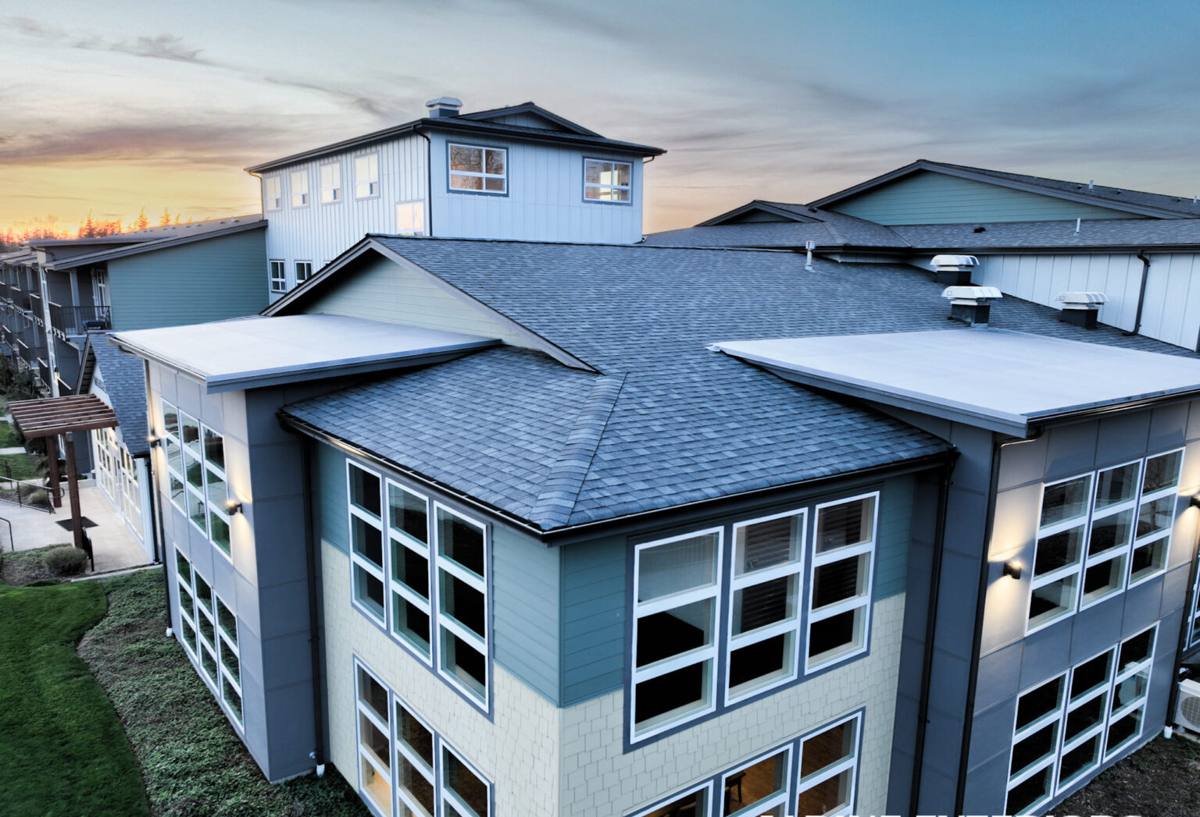
What South Hill's Climate Actually Does to Siding
Whatcom County's marine climate is mild, which is part of why people love living here — but "mild" doesn't mean gentle on a house. Three conditions specifically shape how we approach installation on South Hill:
Salt Air
Homes with any real exposure toward the bay take on a fine layer of salt-laden moisture over time. That air accelerates corrosion on unprotected metal — fasteners, flashing, trim connectors — faster than it would ten or fifteen miles inland. Fastener choice and flashing material aren't places to cut corners on a hillside home with water views.
Driving Rain
Wind-driven rain doesn't just fall on a wall, it gets pushed into it — around window and door openings, up under lap edges, into any gap in the weather-resistive barrier. Elevated, exposed lots see more of this than sheltered ones. A siding installation that only looks right from the street but wasn't flashed and lapped correctly underneath will leak eventually; it's a matter of when, not if.
A Long Moss Season
Bellingham's wet season runs long, and shaded north- and west-facing walls on tree-lined South Hill lots barely get a chance to dry out between rain events. Moss and algae need moisture and organic debris to take hold, and siding installed tight against landscaping or without proper clearance and drainage gives them exactly that. The material matters here too — some sidings hold moisture and organic growth far more readily than others.
What a Correct Installation Actually Involves
A siding job is only as good as what's happening behind the visible surface. On a South Hill home, we treat every layer as part of the water-management system, not just the finish layer people see from the sidewalk.
- Sound sheathing: Any rot, delamination, or soft spots in the wall sheathing get identified and repaired before new siding goes up — covering a bad substrate just hides the problem for a few more years.
- A continuous weather-resistive barrier: Housewrap or building paper installed shingle-style, with every seam and penetration properly lapped, so water is directed out and down, never trapped behind the siding.
- Correct flashing at every penetration: Windows, doors, vents, hose bibs, and any other wall penetration get flashed to shed water outward, not into the wall cavity — this is the single most common failure point we see on older re-sides.
- Proper fastening: Corrosion-resistant fasteners, driven to the manufacturer's specified depth and pattern — overdriven or underdriven nails are a leading cause of premature siding failure.
- Manufacturer-specified clearances: Gaps at grade, roof lines, decks, and other siding-to-surface transitions so water has somewhere to go and the bottom edge of the siding isn't sitting in standing moisture.
- Caulking and sealant used correctly, not as a crutch: Sealant belongs at specific joints called out by the manufacturer — not smeared everywhere as a substitute for proper flashing and lapping.
Why We Install Only James Hardie Fiber Cement
We standardized on James Hardie fiber cement siding for every installation we do, including here on South Hill, and it comes down to how the material performs against the exact conditions this neighborhood deals with. Fiber cement is non-combustible, doesn't support moss and algae growth the way some other siding materials do, and holds up to sustained damp exposure without the swelling, warping, or moisture absorption issues that affect wood-based and some engineered wood products. Hardie's ColorPlus factory finish is baked on under controlled conditions, which gives it better fade and chip resistance than field-applied paint, and it carries a strong transferable warranty when installed to spec — which matters if you ever sell the home.
We don't install vinyl, LP SmartSide, Cemplank, Allura, primed spruce, or cedar. Each of those products has legitimate uses and a place in the market. We simply made a call, based on what holds up best in Whatcom County's specific climate over decades rather than years, to build our installation process, training, and warranty backing around one system we can stand behind completely.
Our Installation Process
- On-site assessment: We walk the exterior, check the current siding and sheathing condition, note exposure direction, drainage, and any moisture history around windows, decks, and grade lines.
- Removal and substrate inspection: Old siding comes off and we inspect the sheathing and framing underneath before anything new goes up. Any rot or damage gets addressed here, not covered over.
- Weather barrier installation: A continuous, properly lapped weather-resistive barrier goes on the whole wall system before siding starts.
- Flashing and trim: Windows, doors, and penetrations get flashed first, so water management is built into the wall before the visible siding covers it.
- Siding installation to manufacturer spec: Hardie panels or planks installed with correct fastening, clearances, and joint treatment, following James Hardie's published installation instructions — this is what keeps the warranty valid.
- Final detailing and walk-through: Caulking at specified joints, cleanup, and a walk-through so you know what was done and why.
Matching Siding to South Hill's Housing Stock
South Hill has a real mix of housing — older homes with genuine character alongside newer construction, many taking advantage of the hillside's views. That mix means we're not installing one profile on every job. Older homes with traditional narrow lap siding often call for a matching Hardie plank width to keep the original proportions intact, especially on homes where the existing trim and window details were designed around a specific reveal. Homes with more contemporary lines sometimes suit Hardie panel systems with battens, or a wider plank exposure. Part of the estimate conversation is figuring out which Hardie product and profile fits the house you actually have, not just defaulting to whatever's fastest to install.
What Affects the Cost of a South Hill Siding Installation
Every home is different, but these are the main factors that move the price on a siding installation up or down. We give exact numbers only after seeing the house in person — anyone quoting a firm price sight unseen is guessing.
| Factor | Why It Matters |
|---|---|
| Home size and wall complexity | More corners, gables, and dormers mean more cutting, flashing, and labor time per square foot of coverage. |
| Sheathing condition | Rot or moisture damage found during tear-off adds repair work before new siding can go on — this is common on older South Hill homes with a history of water intrusion. |
| Siding profile and product line | Lap width, panel style, and which Hardie HZ product line fits our climate zone affect material cost and install time. |
| Trim and accessory scope | Fascia, corner boards, window trim, and soffit work done alongside siding add scope but also protect the same water-management system. |
| Access and site conditions | Steep hillside lots, tight setbacks, or limited staging space can affect equipment access and labor time. |
| Removal and disposal | Tear-off and haul-away of old siding material is a real cost, especially with multiple existing layers. |
Signs Your South Hill Home May Need New Siding
- Visible cracking, buckling, or warping in the current siding, especially on bay-facing or shaded walls
- Soft spots or give when you press on the siding near the bottom edge or around windows
- Persistent moss or algae growth that comes back within weeks of cleaning
- Paint that's peeling, bubbling, or failing faster than a normal repaint cycle would explain
- Rising energy bills with no other explanation, which can point to a failing weather barrier
- Visible gaps, missing caulk, or separated joints around trim and window edges
- Interior signs like staining, musty smell, or soft drywall near exterior walls
Why a Crew That Already Works South Hill Matters
A siding installer who works Whatcom County regularly already knows how to detail a wall for driving rain and long wet seasons — it's not a special case, it's every job. That familiarity shows up in small decisions: how tight to run a clearance at grade on a sloped lot, how to flash a window on a wall that catches wind off the bay, which fastener spec actually holds up against salt-tinged air over twenty years instead of five. None of that is exotic knowledge, but it's the difference between a siding job that looks right on install day and one that's still performing correctly a decade later.
If you're weighing a siding installation on your South Hill home, we're happy to take a look and give you a straight assessment — no pressure, no inflated scare tactics about your current siding, just an honest read on what your house needs. Reach out for a free estimate and we'll walk the property with you.