 Bellingham
 Blaine's Climate Puts Real, Ongoing Stress on Siding
Blaine sits at the far northwest corner of Whatcom County, right on the water and right at the Canadian border, which means homes here take a different kind of weather beating than houses twenty miles inland. Salt-laden air off the bay works into seams, fasteners, and any gap in a home's paint film. Wind-driven rain doesn't just fall straight down — it gets pushed sideways into laps, corners, and trim joints where ordinary siding was never designed to shed water from that angle. And because this part of Whatcom County stays cool, damp, and shaded for long stretches of the year, moss and algae get a running start each fall and don't let go until late spring.
None of that is dramatic on its own. The problem is what it does over years: it finds the one weak seam, the one nail that backed out, the one caulk joint that failed, and it turns a small defect into a rotten wall sheathing repair. Siding repair in Blaine isn't just about making a wall look better — it's about stopping water and salt exposure before they reach the framing.
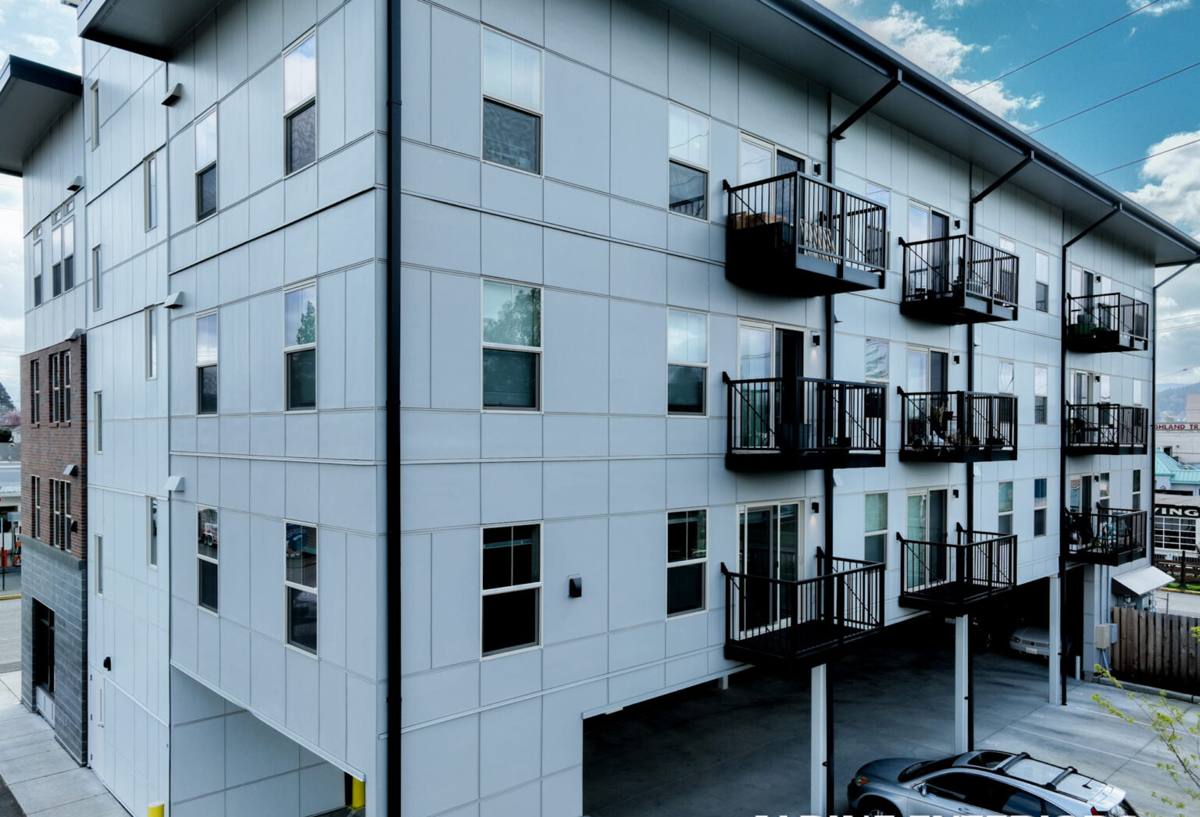
Warning Signs It's Time for a Repair
Most siding failures give warning before they become structural problems. Homeowners in Blaine should walk their exterior at least twice a year — once before winter, once after — and look for:
- Soft or spongy spots when you press on siding, especially near the bottom courses and around windows
- Visible gaps, cracks, or separation at butt joints and corner trim
- Paint that's bubbling, peeling, or chalking unevenly in patches rather than across the whole wall
- Persistent moss or dark streaking that comes back within weeks of cleaning
- Warping, cupping, or buckling boards, particularly on north- and west-facing walls that stay wet longest
- Stains on interior walls or ceilings near exterior corners, a sign water has already gotten past the siding
- Fasteners that have backed out or rust-streaked below nail heads
Any one of these can be a minor fix if caught early. Left alone through another wet season, most of them stop being siding repairs and start being sheathing and framing repairs.
What Actually Happens During a Correct Repair
Diagnosis Before Patching
A repair that only addresses the visible symptom tends to fail again in the same spot. Before we replace a single board, we look at why that section failed — a missing kick-out flashing, a caulk joint that was never sealed, a fastener pattern that let water track behind the panel. Patching over an unresolved water path just buys a year or two before the same damage reappears, often worse.
Checking What's Behind the Siding
Once boards come off, we check the water-resistive barrier and sheathing underneath. In a coastal, high-rainfall area like Blaine, this step matters more than it does inland — if the barrier is torn, improperly lapped, or the sheathing has already softened, replacing the visible siding without addressing what's underneath just seals a problem back in.
Matching Material and Finish
Repairs on a home with fiber cement siding need boards from a matching product line and, ideally, a factory-matched or closely blended finish so the repaired section doesn't stand out as a patch. Repairs on other siding types — vinyl, LP SmartSide, cedar, older fiber cement brands — are more limited, because exact color and profile matches get harder to find as products age off the market, and some materials simply don't hold up to a second round of patching the way fiber cement does.
Repair or Replace? How We Help You Decide
Not every damaged section needs a full re-side, and not every "repair" is worth doing if the underlying siding is at the end of its service life. We walk homeowners through the honest trade-offs rather than defaulting to the more expensive answer.
| Factor | Favors Repair | Favors Replacement |
|---|---|---|
| Extent of damage | Isolated to one or two wall sections | Recurring across multiple elevations |
| Underlying sheathing | Dry, solid when probed | Soft, delaminating, or visibly rotted |
| Siding age and material | Fiber cement, still within useful life | Original material discontinued or failing broadly |
| Moisture barrier condition | Intact, properly lapped | Torn, missing, or never installed correctly |
| Cosmetic match | Close color/profile match available | No reasonable match, patch would be visible |
When damage is contained and the structure behind it is sound, a targeted repair is the right call, and we'll tell you that plainly. When the pattern of failure points to a systemic issue — an aging product reaching the end of its practical life, or water intrusion across several walls — we'll say that too, even though a repair is the smaller job for us.
Why We Approach Repairs Through a James Hardie Lens
Bellingham Siding installs only James Hardie fiber cement siding — we don't install vinyl, LP SmartSide, cedar, primed spruce, or other fiber cement brands. That standard shapes how we handle repairs, too. When we're patching an existing Hardie installation, we can match the HZ5 product line and ColorPlus factory finish closely enough that the repair blends in and carries the same real-world performance the rest of the wall was built for — non-combustible, dimensionally stable, and engineered for exactly the wet, salt-exposed conditions Blaine sees.
When a home has other siding material failing in a way that's chronic rather than isolated — recurring rot at the same trim lines, a finish that won't hold paint, moss that keeps coming back no matter how often it's cleaned — patching that material again often isn't the best use of a homeowner's money. In those cases we'll walk you through what it would take to transition that section, or eventually the whole exterior, to Hardie, and why we think that's the more durable answer for this climate rather than another short-term patch.
Our Process for Blaine Homeowners
- On-site inspection. We look at the damaged area, probe surrounding sections for hidden soft spots, and check flashing and caulk joints nearby.
- Honest diagnosis. We tell you what caused the failure, not just what it looks like, and give you a repair-vs-replace recommendation based on what we actually find.
- Written scope and estimate. You know exactly what's being repaired, what material is used, and what it costs before work starts.
- Repair work. Damaged sections are removed, the sheathing and moisture barrier are corrected if needed, and matching material is installed to spec — correct fastening, proper clearances, and sealed joints where the product calls for it.
- Final check. We walk the repaired area with you before we consider the job done.
Why Local Experience in Blaine Matters
A repair crew that hasn't worked this specific stretch of Whatcom County can miss things that are obvious to a crew that has. How far wind-driven rain pushes water up a wall on an exposed, water-facing lot. How long moss takes to re-establish on a shaded north wall through a Pacific Northwest winter. Which failure patterns are cosmetic and which are an early sign of trouble behind the siding. That local pattern recognition is the difference between a repair that solves the actual problem and one that just covers it up for a season.
It also matters for accountability. A local, established crew is easy to call back if something isn't right, and has a reputation in the community worth protecting — which tends to show up in how carefully the work gets done the first time.
After the Repair: Keeping Moss and Salt Air From Coming Back
A correct repair buys you years, but a little seasonal upkeep protects that investment. Rinse siding gently once or twice a year to keep salt residue and organic buildup from settling in, especially on shaded or water-facing walls. Keep gutters clear so overflow doesn't run down the siding face. Trim back vegetation that keeps a wall shaded and damp longer than it needs to be. And do a quick visual walk of the exterior each fall before the wet season sets in — catching a small issue in October is a lot cheaper than dealing with it in March.
If you're seeing any of the warning signs above, or just want a second opinion on whether a section of your home needs a repair or something more, we're happy to take a look. We offer free, no-pressure estimates for Blaine homeowners — no obligation, just an honest assessment of what your siding actually needs.