 Bellingham
 Storm Damage Roof Repair Built for Puget's Weather
If you own a home in the Puget neighborhood, you already know Bellingham weather doesn't do your roof any favors. Wind off the water drives rain sideways under shingles that would stay dry in a calmer climate. Salt-tinged air off Bellingham Bay works on exposed metal year-round. And the long gray stretch from fall through spring gives moss and moisture months to sit on a roof surface with nowhere to dry out. When a windstorm or a hard rain event finally exposes a weak spot, it's rarely a roof that failed all at once — it's usually one that had already been softened up by the local climate for a year or two.
This page is about one job done right in one place: storm damage roof repair for homes in and around Puget. Not a generic overview of roofing services — the specific work of assessing what a storm actually did to a Whatcom County roof, and fixing it correctly the first time.
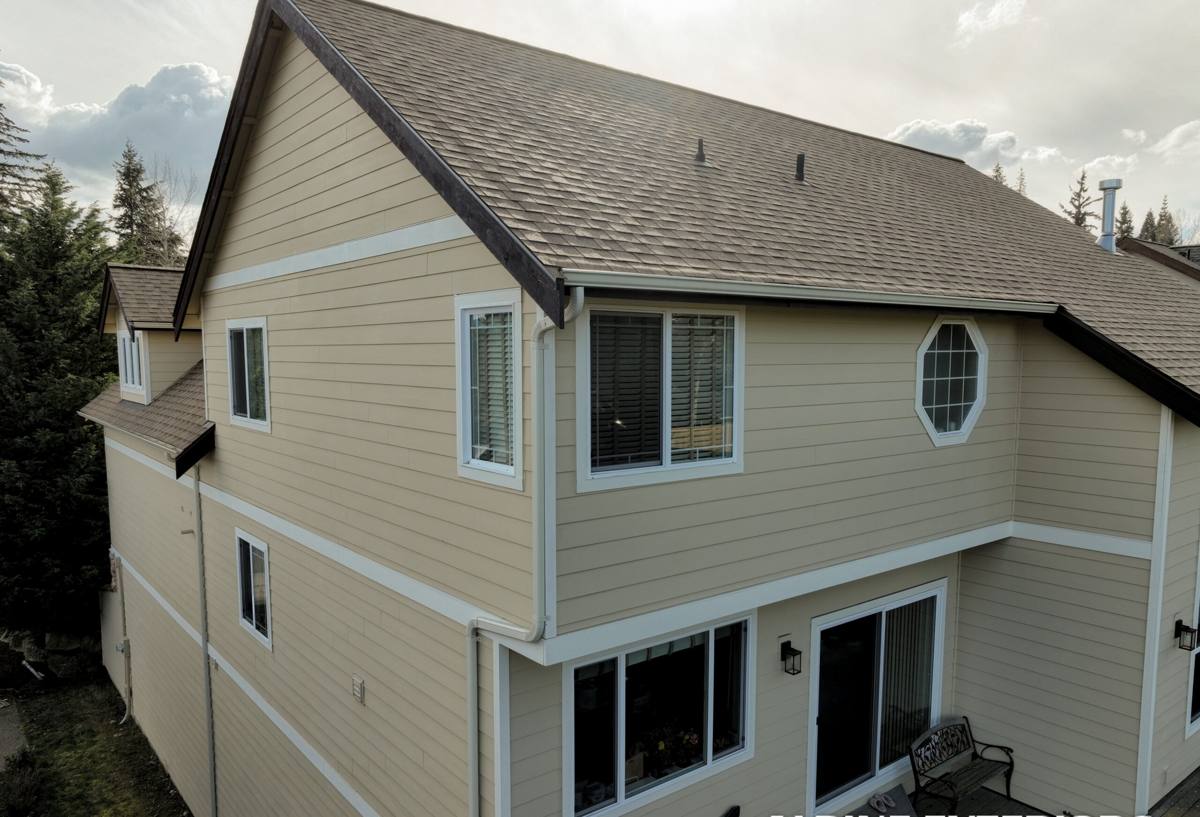
What Puget's Microclimate Does to a Roof Over Time
Every roofing material has a rated lifespan, but that number assumes average conditions. Puget doesn't get average conditions — it gets a combination of factors that shortens the margin between "fine" and "failing":
- Wind-driven rain: Storms coming off the Sound push water horizontally, not just down. That means water finds gaps at ridge caps, sidewall flashing, and shingle edges that a straight-down rain would never reach.
- Salt air corrosion: Metal flashing, fasteners, and vent caps near the water corrode faster than the same materials would inland. A pinhole in flashing doesn't leak much on a calm day — but add wind pressure during a storm and it leaks fast.
- Moss and organic growth: Bellingham's damp, shaded stretches let moss establish on roof surfaces that get less afternoon sun. Moss holds moisture against shingles, lifts tabs as it grows, and works its way under the roofing layer over a season or two.
- Freeze-thaw cycling: It doesn't need to be brutally cold — a handful of freeze-thaw cycles each winter is enough to widen small cracks in flashing sealant and roofing cement into real gaps.
None of this means Puget roofs are doomed — it means storm damage here is often the visible symptom of conditions that have been building for a while. That's part of why a proper repair has to look past the obvious damage and check what led to it.
What Counts as Storm Damage
Storm damage isn't always dramatic. Some of it is obvious the morning after a windstorm; some of it only shows up as a stain on a ceiling weeks later. Homeowners in Puget should watch for:
- Missing, cracked, or curled shingles, especially on the side of the roof that faces the prevailing wind and rain
- Lifted or bent flashing around chimneys, skylights, vent pipes, and roof-to-wall transitions
- Granules collecting in gutters or at downspout outlets after a storm
- Dented or creased metal flashing, gutters, or vent caps
- Soft spots, sagging, or discoloration on interior ceilings near exterior walls
- Debris punctures from branches or wind-carried material
- Moss buildup that's thicker on one side of the roof, often a sign that section stays wetter longer and is more vulnerable
Some of these are urgent — active leaks and exposed decking need attention before the next system moves through. Others, like early granule loss or thin moss growth, are worth documenting and addressing before they become urgent.
What a Correct Repair Actually Involves
Start Below the Surface
A repair that only replaces the shingles you can see from the ground is a temporary fix. Once we're on the roof, we check the decking underneath the damaged area for soft spots or water staining, inspect the underlayment where it's exposed, and confirm nail patterns and flashing details are correct — not just replaced with whatever was easiest.
Match the Materials, Not Just the Color
Shingles from different manufacturing runs, or different product lines entirely, can vary slightly in thickness and profile even when the color looks close. We aim to match not just shade but the actual product line where possible, so a repaired section doesn't age differently than the surrounding roof and become a visible patch a few years down the road.
Flashing Gets the Same Attention as Shingles
Most recurring leaks after a "repair" trace back to flashing that was reused or resealed instead of replaced. In a salt-air, high-wind environment like Puget, we treat flashing at chimneys, walls, and valleys as a wear item that gets replaced when it's compromised — not just caulked over.
Ventilation and Moisture Balance
A roof that traps moisture underneath — from poor attic ventilation — will show storm damage faster and heal from it slower. Where a repair area shows signs of trapped moisture or heat damage to the decking, we'll flag ventilation as part of the conversation, not push it as an upsell.
Repair vs. Replace: How We Help You Decide
Not every storm-damaged roof needs full replacement, and not every roof is a good candidate for another round of patching. The honest answer depends on a handful of factors:
| Factor | Leans Toward Repair | Leans Toward Replacement |
|---|---|---|
| Extent of damage | Localized to one section or slope | Spread across multiple slopes or the whole roof |
| Roof age | Under roughly 10-12 years, or well-maintained | Near or past its expected service life |
| Decking condition | Solid, dry decking under the damage | Soft, rotted, or repeatedly wet decking |
| Moss/growth history | Minimal, recently treated | Heavy, longstanding growth across large areas |
| Prior repairs | First or second repair on this roof | Multiple past patches in different areas |
We'll give you a straight read on which side of that table your roof falls on, with the reasoning behind it — not a default push toward the bigger job.
Insurance and Documentation
Storm damage is often the trigger for a homeowners insurance claim. We're not your insurance adjuster and won't promise a claim outcome, but we can document what we find on the roof clearly — photos, notes on affected areas, and a written scope of the repair — so you have accurate information to bring to your insurer. Getting a timely, honest assessment after a storm matters, since some policies have windows for filing and adjusters want to see damage before it worsens from further weather.
Our Repair Process
- Inspection: We walk the roof (or use a lift/drone where pitch or access makes that safer) to assess damage, decking condition, and contributing factors like moss or flashing wear.
- Written scope and estimate: You get a clear breakdown of what's damaged, what we recommend, and why — with repair and replacement options laid out honestly if both are viable.
- Material match: We source shingles and flashing that match your existing roof as closely as possible before scheduling the work.
- Repair: Damaged materials come off down to sound decking, underlayment and flashing are addressed as needed, and new materials go in following manufacturer specs for our wind and rain conditions.
- Cleanup and walk-through: We clear debris and nails from the property and walk the finished work with you before we consider the job done.
Why a Crew That Already Works Puget Matters
A repair crew that's spent time on Puget roofs already knows what to expect before they climb the ladder: which slopes typically hold moss longer, how the local wind pattern tends to concentrate damage on certain roof faces, and what flashing details tend to fail first in this specific stretch of Whatcom County. That's not a substitute for a careful inspection on your specific roof, but it means less guesswork and fewer surprises once the work starts. It also means we're a call away if a repair needs a follow-up look after the next big storm — we're not driving in from out of the area for a one-time job.
After the Repair: Keeping Storm Damage From Coming Back
A good repair buys you time, but Bellingham's climate doesn't let up. A few habits go a long way toward protecting the work:
- Keep gutters and downspouts clear so wind-driven rain has somewhere to go besides under your shingles
- Have moss treated before it establishes heavily, rather than after it's already lifting shingle tabs
- Trim back overhanging branches that drop debris or hold moisture against the roof surface
- After any major windstorm, do a visual check from the ground for obvious missing or shifted material
- Bring in a professional look every couple of years, even without an obvious problem, so small issues get caught while they're still small
If a recent storm left your Puget-area roof with missing shingles, damaged flashing, or a leak you can't pin down, we're happy to take a look and give you a straight, no-pressure assessment. Fill out the form below for a free estimate — there's no obligation, and you'll get an honest answer about what your roof actually needs.